
Premiering Wednesday, Feb. 16 at 7 p.m.
The sardine run along the East coast of South Africa is one of nature’s greatest spectacles, a challenging voyage for these fish as they navigate the ocean, barely escaping the mouths of hungry predators who depend on this event for food. Between May and July, billions of these tiny fish gather to create a shoal that is many miles long. As the largest biomass migration on the planet, researchers estimate the sardine run could rival Africa’s wildebeest migration. Prompted by an influx of cold water, billions of sardines start a journey that becomes a “moveable feast” for predators like sharks, dolphins, gannets, seals and whales. Specialty underwater filming techniques, such as multidirectional floating cameras and mounted cameras on boats, capture this event in stunning, closeup detail.
Moments to watch for:
The arriving school of sardines breaks up a moment of tension among a colony of hungry seals. Hundreds of seals immediately dive into the water and quickly propel themselves into the massive school, swallowing sardines whole.
Cape gannets are impressive high-speed dive bombers that demonstrate incredible agility underwater as they fly through the ocean with their wings. When the sardines are pushed to the surface, the birds dive-bomb with expert precision at up to 60 mph, snatching the little fish and bobbing back up to the surface. A colony of gannets eats up to 9,000 tons of fish in one breeding season.
Sharks creep up next to the sardine run to try and plan an attack, but the sardines detect the movement in the waves. One sardine swiftly moves away and the rest follow, creating a bait ball and making the shark unable to catch a bite. Tuna come along to separate the sardines into smaller sections and move them towards the surface where they share the feast with the sharks and seagulls.
Did you know?
The sardine run is the largest biomass migration on the planet, rivaling the great herds of the Serengeti.
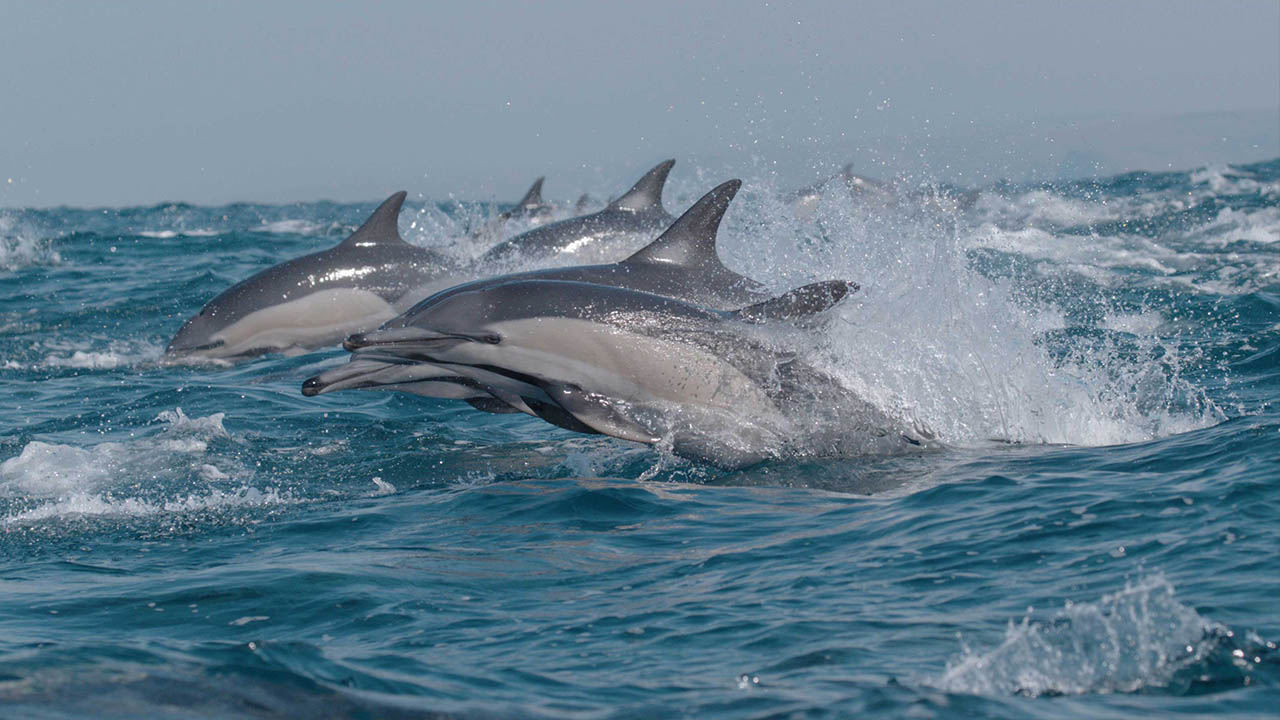
Common dolphins are the keystone heroes of the sardine run, acting as orchestrators of feeding events for sardine predators, such as sharks, gannets and whales.
Orcas swim thousands of miles to intercept the sardine run and hunt dolphins, allowing sardines to swim away from their initial predators.
SPOTLIGHT





STAY in touch
with azpbs.org!
Subscribe to Arizona PBS Newsletters:
Gifts presented by Arizona PBS







March 11
Women’s History Month 2026