Why is this Arizona tribe moving away from the name ‘Pima?’
Dec. 19, 2025
The story of the Akimel O’odham is far deeper than many people realize, and understanding the history of their name helps restore truth, identity and cultural accuracy.
“Akimel O’odham” translates to “River People,” a name that reflects their relationship with the Gila and Salt Rivers and their long history of farming, stewardship and community along the waterways of what is now central and southern Arizona. Yet for generations, most outsiders have known them by a different name: “Pima.”
The label “Pima” did not come from the Akimel O’odham themselves. Instead, historians widely believe it originated from early Spanish encounters. When Spanish explorers asked the people who they were, the Akimel O’odham responded in their own language with a phrase meaning, “I don’t know,” “I don’t understand” or “I don’t speak Spanish,” often interpreted as pi ’añi mac or something similar. The Spanish mistook this response for the group’s name and recorded it as “Pima.” Over time, the misinterpretation stuck, and the name spread through maps, government documents and historical records.
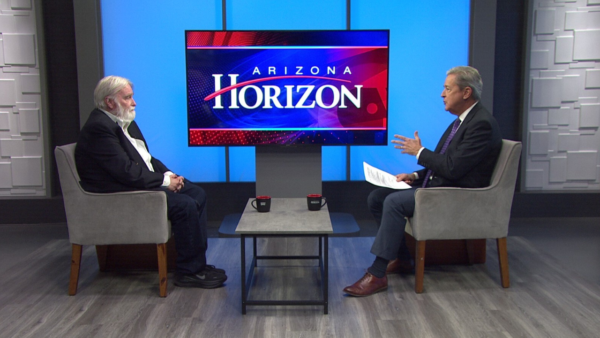
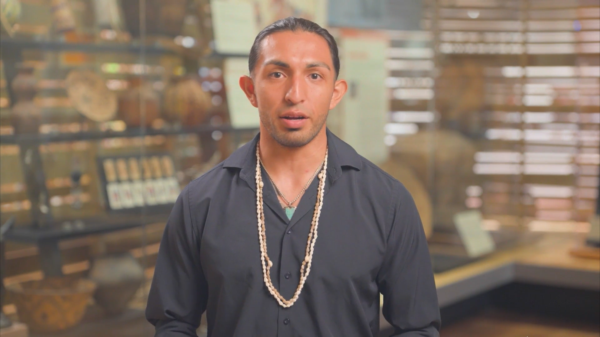
Jivik Siik, a cultural teacher, explains how that misunderstanding shaped the identity of an entire community in the eyes of outsiders, while the people themselves continued to use their true name. It also highlights why reclaiming the name “Akimel O’odham” is meaningful today, especially in efforts to preserve cultural knowledge, protect Indigenous languages and tell accurate stories about the land and the people who have lived on it since long before Arizona existed.
By learning the real history of the name, viewers gain a clearer, more respectful understanding of the Akimel O’odham, their language and their legacy. This video invites you to look beyond the labels history imposed and reconnect with the truth of who the River People truly are.

Each Friday we’ll be sharing a peek into the past that shows what life was like here, in what’s now Arizona, at the time of the American Revolution ahead of the semiquincentennial or 250th anniversary of the United States.
Stay tuned to learn more about “What Happened in AZ?” each week.
Corporate funding for THE AMERICAN REVOLUTION was provided by Bank of America. Major funding was provided by The Better Angels Society and its members Jeannie and Jonathan Lavine with the Crimson Lion Foundation; and the Blavatnik Family Foundation. Major funding was also provided by David M. Rubenstein; The Robert D. and Patricia E. Kern Family Foundation; Lilly Endowment Inc.; and the following Better Angels Society members: Eric and Wendy Schmidt; Stephen A. Schwarzman; and Kenneth C. Griffin with Griffin Catalyst. Additional support for THE AMERICAN REVOLUTION was provided by: The Arthur Vining Davis Foundations; The Pew Charitable Trusts; Gilbert S. Omenn and Martha A. Darling; Park Foundation; and the following Better Angels Society members: Gilchrist and Amy Berg; Perry and Donna Golkin; The Michelson Foundation; Jacqueline B. Mars; Kissick Family Foundation; Diane and Hal Brierley; John H. N. Fisher and Jennifer Caldwell; John and Catherine Debs; The Fullerton Family Charitable Fund; Philip I. Kent; Gail Elden; Deborah and Jon Dawson; David and Susan Kreisman; The McCloskey Family Charitable Trust; Becky and Jim Morgan; Carol and Ned Spieker; Mark A. Tracy; and Paul and Shelley Whyte. THE AMERICAN REVOLUTION was made possible, in part, with support from the Corporation for Public Broadcasting.
SPOTLIGHT


STAY in touch
with azpbs.org!
Subscribe to Arizona PBS Newsletters:
Gifts presented by Arizona PBS







Full Episode Feb. 5
Edge of Eternity: Exploring Monument Valley