Prop. 320 forces schools to spend 60% of budgets on loosely defined instructional expenses
Oct. 8
A Republican backed measure could force larger public school districts to spend larger portions of their budgets on “direct instructional expenses,” without receiving any additional funding.
Except that, Proposition 320 doesn’t have a clear definition of what constitutes “direct instructional expenses.” Instead, the Auditor General would be tasked with defining what “direct instructional expenses” are since it’s not clearly outlined in the bill.
The Auditor General oversees how public funding is spent to help ensure government agencies and programs are properly using taxpayer dollars.
Republican Sen. Jake Hoffman, who helped sponsor the bill, said it would help teachers receive higher salaries.
“A lot of districts just never gave those teachers the money that they were entitled to and so this entire measure is designed with that end goal in mind,” Hoffman said during a March 23 Senate floor session. “We want to make sure that the money is flowing through to classrooms, that is flowing to direct instructional expenses,” he said.
The Goldwater Institute, a conservative public policy group, refers to Prop. 320 as the “Prioritize Teacher Pay Act,” on their website and asks voters to support it. The group was also behind the creation of the bill.
But, some Democrats and education advocacy groups said the bill’s wording is deceptive to Arizona voters.
The bill would force the largest school districts in the state to allocate 60% of their budgets to direct instructional expenses. If schools are noncompliant, they would see their part of the Classroom Site Fund slashed by 25% annually, until it could potentially reach zero.
The Classroom Site Fund covers the cost of teacher salaries and bonuses and helps reduce class sizes. It also helps pay for student support services such as school nurses, counselors and school psychologists.
Arizona public schools consistently rank at the bottom of the nation in large part due to constantly being poorly funded. Last year, a Maricopa County Superior Court judge’s ruling found that the state was unconstitutionally chronically underfunding public school districts.
How could Prop. 320 affect public schools?
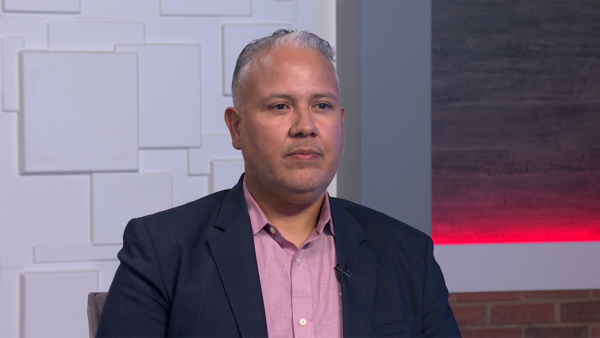
Education Forward Arizona (EFA) is a nonpartisan group that advocates for Arizonans to have equal access to high-quality education. Ricardo Lopez Valencia is EFA’s Senior Vice President of Education and Workforce Alignment.
The bill wouldn’t guarantee teacher salary increases and could in fact take away funding for vital support staff such as bus drivers, teacher assistants, counselors and force schools to cut costs in other areas, he said.
“The proposition does not establish a specific teacher salary increase or guarantee that an individual teacher will receive additional compensation. So, if our goal is higher teacher pay, we should pursue policies that actually guarantee higher teacher pay,” Lopez Valencia said.
EFA polled voters asking if they supported increasing teacher pay and directing more funding to the classroom, which is how supporters present the proposition. Approximately 64% of surveyed voters said they would support Prop. 320. More than 600 registered voters were polled across all party lines, even those without a party affiliation.
That’s why it’s important that voters thoroughly understand ballot measures, Lopez Valencia said.
“What our poll demonstrated is that initially on the front end, Prop. 320 sounds reasonable, ” Lopez Valencia said. “But once we explain the consequence and the potential impact of 320, people change their mind and understand that it has a negative impact on Arizona schools, and most importantly Arizona students,” Lopez Valencia added.
Republicans hold the majority in both the senate and house chambers. Legislators voted to push through Prop. 320 in order to get it on the ballot.
This November, Arizonans will decide whether or not to pass Prop. 320.
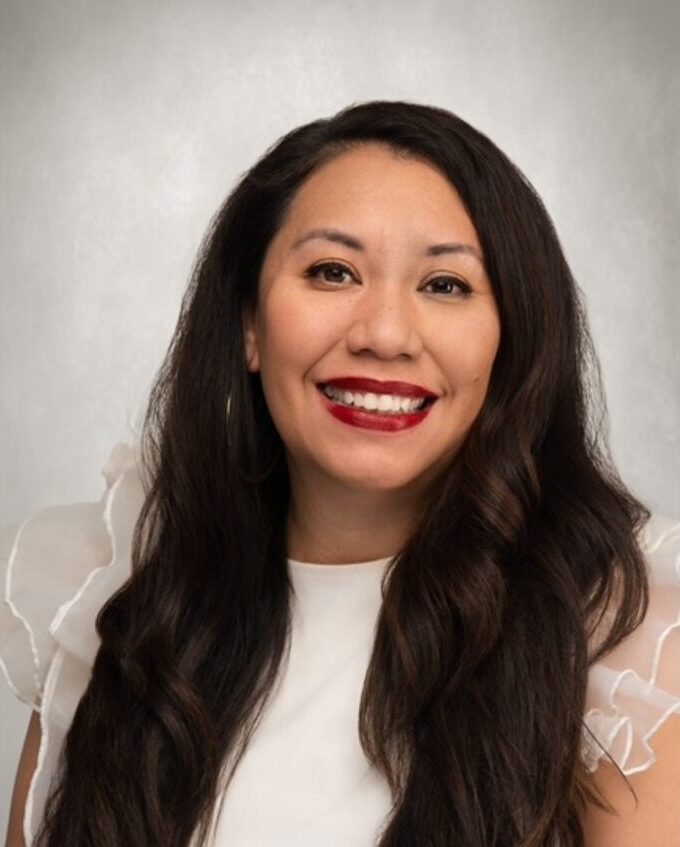
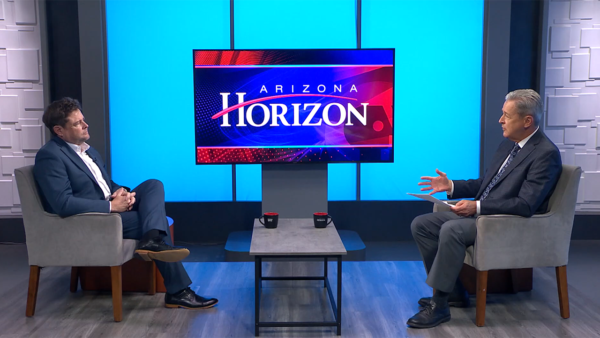
Reporting by “Arizona Horizon” Education Solutions Reporter Roxanne De La Rosa. Her role is made possible through grant funding from the Arizona Local News Foundation’s Arizona Community Collaborative Fund and Report for America.