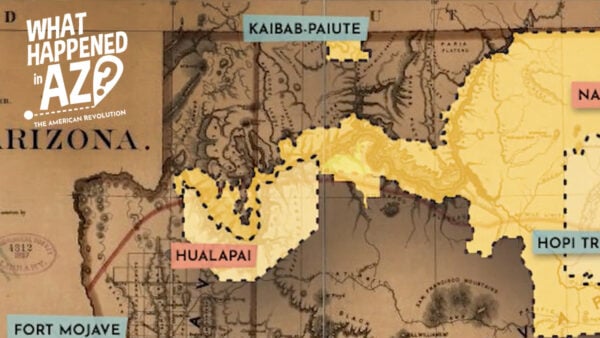
How did the reservation system begin, and what did it mean for Indigenous communities in Arizona? In this episode of “What Happened in AZ?,” we take a closer look at the origins and lasting impact of reservations.
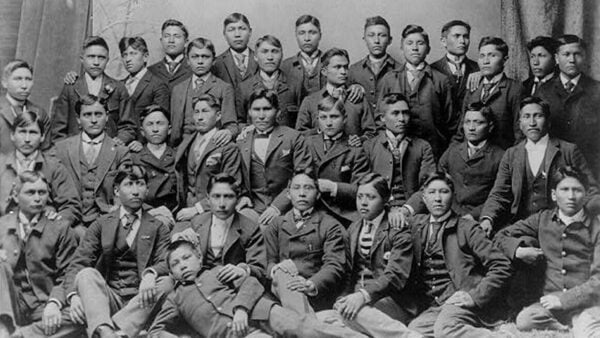
Reservations were established as part of U.S. government policies that sought to relocate and contain Indigenous populations on designated lands. For many tribes in Arizona, this meant being removed from ancestral territories and adapting to new boundaries that disrupted traditional ways of life. These policies were often enforced through treaties, executive orders and military action, reshaping the region and the lives of its original inhabitants.
This episode explores how the reservation system affected Indigenous communities socially, culturally and economically. Restricted movement, limited resources and outside governance created challenges that continue to influence daily life. At the same time, reservations became places where cultures were preserved, traditions were maintained and communities adapted with resilience.
Today, reservations are sovereign lands where tribes govern themselves and work to strengthen their communities. While the system’s origins are rooted in displacement and control, Indigenous nations across Arizona continue to assert their identity, protect their heritage and build their futures.
Through historical context and thoughtful storytelling, “What Happened in AZ?” examines a complex and often misunderstood chapter of Arizona’s past, one that continues to shape its present.
Corporate funding for THE AMERICAN REVOLUTION was provided by Bank of America. Major funding was provided by The Better Angels Society and its members Jeannie and Jonathan Lavine with the Crimson Lion Foundation; and the Blavatnik Family Foundation. Major funding was also provided by David M. Rubenstein; The Robert D. and Patricia E. Kern Family Foundation; Lilly Endowment Inc.; and the following Better Angels Society members: Eric and Wendy Schmidt; Stephen A. Schwarzman; and Kenneth C. Griffin with Griffin Catalyst. Additional support for THE AMERICAN REVOLUTION was provided by: The Arthur Vining Davis Foundations; The Pew Charitable Trusts; Gilbert S. Omenn and Martha A. Darling; Park Foundation; and the following Better Angels Society members: Gilchrist and Amy Berg; Perry and Donna Golkin; The Michelson Foundation; Jacqueline B. Mars; Kissick Family Foundation; Diane and Hal Brierley; John H. N. Fisher and Jennifer Caldwell; John and Catherine Debs; The Fullerton Family Charitable Fund; Philip I. Kent; Gail Elden; Deborah and Jon Dawson; David and Susan Kreisman; The McCloskey Family Charitable Trust; Becky and Jim Morgan; Carol and Ned Spieker; Mark A. Tracy; and Paul and Shelley Whyte. THE AMERICAN REVOLUTION was made possible, in part, with support from the Corporation for Public Broadcasting.