Arguments against Prop-211, the donor-disclosure law
Sept. 8, 2025
Arizona voters passed Prop-211 in 2022. It is known as the donor-disclosure law, which requires organizations, including nonprofits, to disclose to the government the names, addresses, and donation amounts of their donors. It was designed to combat so-called “dark money.”
Since its passage, activists and politicians have pushed similar rules in more than 30 states. The Goldwater Institute and other organizations believe the proposition violates the Constitution, and this week (Sept. 11th) are arguing before the State Supreme Court to throw out the proposition.
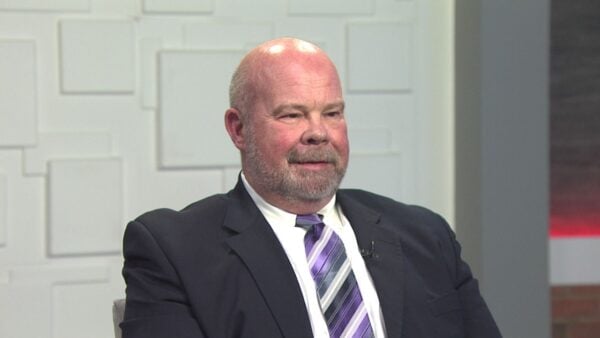
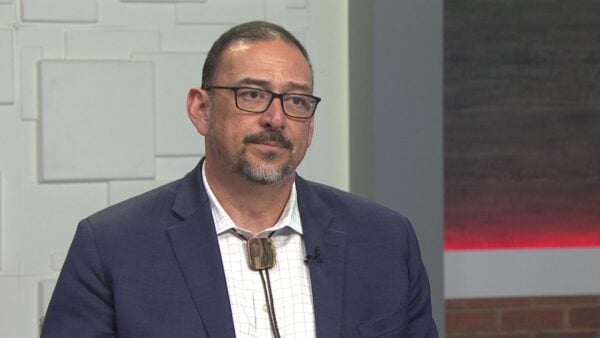
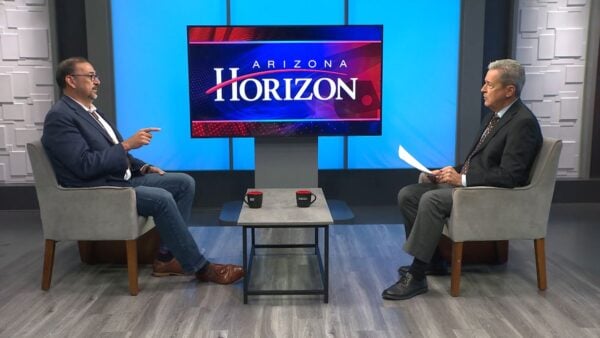
Andrew Gould, attorney and former Arizona Supreme Court Justice, joined “Arizona Horizon” to argue points against the proposition.
“This now reaches into nonprofits like the Center for Arizona Policy or the Arizona Free Enterprise Club and requires disclosure not of just donors over $5,000, but actually goes upstream and gets original donors as low as $2,500,” he said.
Gould said that forcing donors to reveal personal information can expose them to retaliation.
“It doesn’t take any great knowledge to understand the acrimony in today’s politics,” he said. “When you force disclosure, people’s employment, their home address, their names, they face retaliation.”
He cited vandalism and threats at nonprofit offices as evidence of harassment that, he said, courts have overlooked.
Supporters of the measure counter that disclosure ensures an informed electorate. Gould disagreed, saying the law is written too broadly and “sweeps in everyone who gives to these nonprofits.” He also noted that Arizona’s founders intentionally limited campaign-finance disclosure to candidates, not ballot measures or issue groups.
“We have a long history of anonymous speech,” Gould said. “If you strip that away, you lessen the amount of speech in this country. Doxxing people and disclosing their names only silences people.”
In this segment:
Also in this episode:
SPOTLIGHT





STAY in touch
with azpbs.org!
Subscribe to Arizona PBS Newsletters:
Gifts presented by Arizona PBS




Full Episode Feb. 13
Arizona election turnover; preventing romance scams; ‘NOVA’ programming

Feb. 11
LATE dementia on the rise

Feb. 11
Arizona Teacher of the Year 2026
Full Episode Feb. 10
Save historic Arizona; mitral valve device breakthrough; Black Children’s Book Week