New report from ASU examines impact of international students
Oct. 22, 2025
Two economic professors at Arizona State University, Domenico Ferraro and Esteban Aucejo, wrote a new report examining the role and impact of international students on the higher education system.
The results show international students not only strengthen the financial health of U.S. higher education but also fuel innovation, economic growth and global competitiveness.
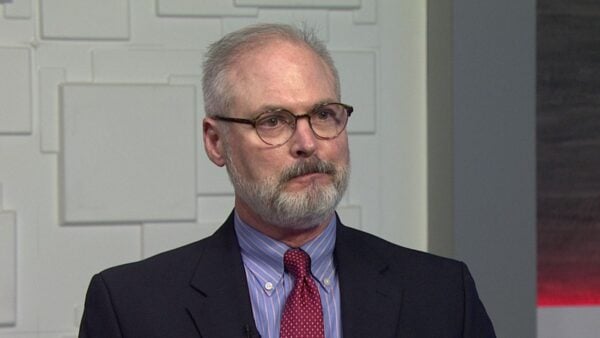
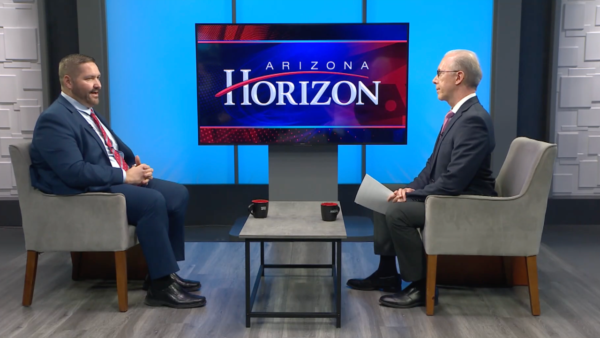
Domenico Ferraro, an ASU Economics Professor, joined “Arizona Horizon” to provide more insight on the report, which can be viewed below.
He said the research began as “an attempt to measure the volume of students,” but also to understand the “value” of international students, which he described as a “multifaceted object that includes the economic impact and those beyond that.”
A key part of the report focuses on the labor market, where Ferraro said international students play an essential role.
“They are more likely to be a part of the STEM occupation,” he explained, noting that STEM is an area “where the demand exceeds supplies.” Because of that shortage, he said international students “are critical in occupation and vital for innovation and growth.”
That innovation carries into technology.
“Tech companies (are) heavily skewed towards the same occupation,” Ferraro said, underscoring how international students help support fields that drive scientific and economic advancement.
He also discussed the financial contributions of international students, who typically pay out-of-state tuition. He described this as a “short economic impact,” explaining that higher education is “a net of educational services,” and that international students “come to the U.S. to learn way more than American students pay abroad.”
The report also addresses concerns about international students “crowding out” opportunities for domestic students.
He said, “There is no evidence of that,” though he acknowledged “some minor crowding” can occur in “major schools or smaller schools” or in specific graduate programs.
Overall, he emphasized that international students often subsidize American students “because they initially pay full tuition.”
Ferraro highlighted their long-term contributions as well. After graduation, many move into the workforce through pathways like the H-1B visa, which he called “critical.” He also pointed to the report’s findings that patents are “more frequent from international students.”
While enrollment growth has recently “started to flatten out bit,” Ferraro said he remains optimistic, stressing that maintaining international student enrollment is essential because “it’s innovation and long-term growth.”
In this segment:
Also in this episode:
SPOTLIGHT





STAY in touch
with azpbs.org!
Subscribe to Arizona PBS Newsletters:
March 13
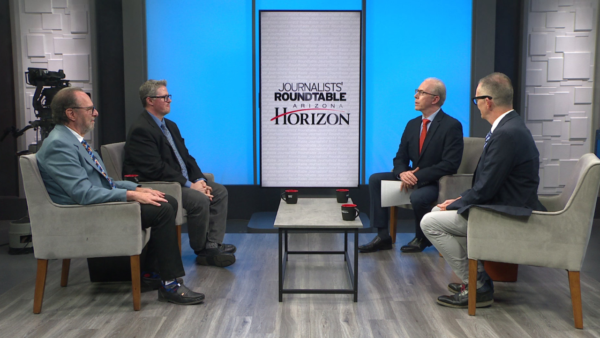
Journalists’ Roundtable: Arizona Senate releases 2020 election recount records to FBI and more

Full Episode March 12
Maricopa County elections, global supply chain, Desert Botanical Garden’s new CEO

Full Episode March 11
Arizona gas prices rise; fraud education for the elderly; newborns exposed to opioids