How Trump’s second term reshaped the Department of Justice
Nov. 20, 2025
President Trump’s second term has brought about a period of turmoil and controversy in the Justice Department. More than 200 career attorneys have been fired, and thousands have resigned.
Many attorneys who no longer work for the DOJ say they were asked to work on behalf of the president’s will, and punish his political enemies. The attorneys also allege that they were asked by the administration to direct criminal investigations that typically would not be lead by the White House.
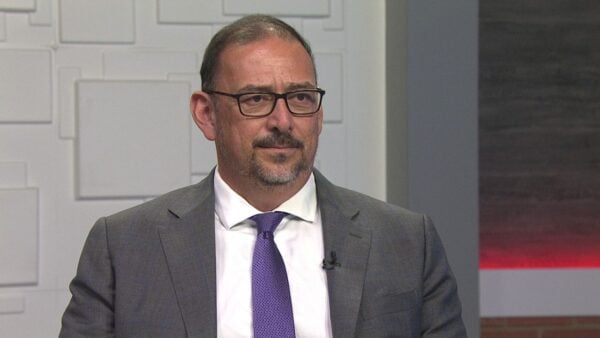
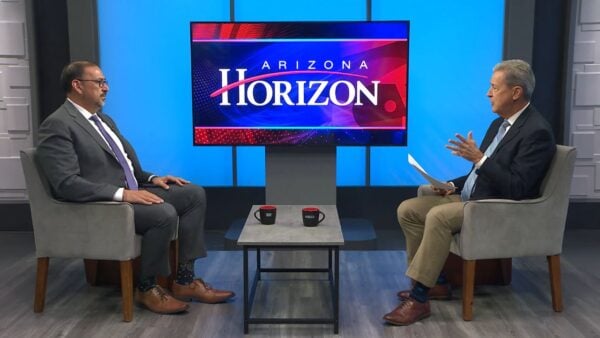
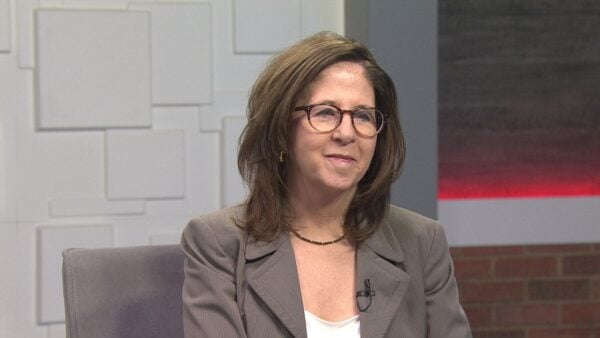
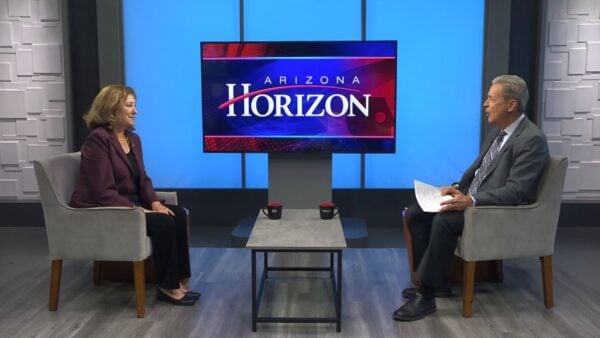
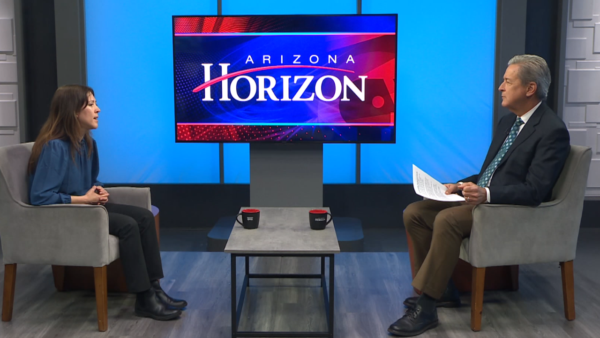
Paul Charlton, former U.S. Attorney, joined “Arizona Horizon” to discuss how the role of the DOJ continues to change during Trump’s presidency.
“I think it’s greatly impaired and greatly damaged,” Charlton said.
He pointed back to the post-Watergate years as the foundation for a modern DOJ meant to operate independent of White House political interest.
“Since the Nixon administration, there’s been a belief within the Department of Justice that it is an institution separate and apart from the White House,” he said. “That culture has been deeply undermined.”
Charlton noted that the clearest evidence of political interference involves pressure placed on prosecutors. One example he cited was the dismissal of public-corruption charges against New York City Mayor Eric Adams. According to Charlton, prosecutors in the Southern District of New York were told the president wanted the case dropped.
“They refused that order and were either fired or had to resign,” he said.
Prosecutors working on January 6 cases have reportedly faced similar directives, with several losing their jobs after declining to adjust cases to align with political demands.
Much of this pressure, Charlton said, has moved through Attorney General Pam Bondi, who has echoed the president’s public stance that the DOJ should enforce his political agenda. He referenced a recent directive ordering prosecutors to investigate all Democrats named in Jeffrey Epstein-related files.
“The correct response is: if there is a crime, we don’t consider whether you are a Democrat or a Republican,” Charlton said. “We first identify the crime and then look for the individual. What’s happening now flips that entirely.”
He warned that the mass departure of experienced attorneys has stripped the department of the knowledge base that helps maintain consistency, fairness, and nonpartisan decision-making.
“It will take a generation to replace those individuals that we have lost,” he said. “That institutional knowledge, that culture that says we are here to pursue justice and not political ends, is extraordinarily difficult to rebuild.”
Charlton pushed back against claims that career prosecutors represent a “deep state,” noting that many of those pushed out were conservatives or military veterans. He described one prosecutor forced to resign, a former law clerk for Justice Antonin Scalia, as an example of how ideology has little to do with these departures.
“These are not political enemies of the president,” he said. “They are people who refused to let politics drive prosecution.”
He said the openness with which political directives are now issued represents a break from any previous administration, including Nixon’s.
“Nixon had a secret list and did things quietly,” Charlton said. “Here, this is very openly discussed. It has become, in a very real way, a personal law firm, but one with the power to impose criminal penalties.”
Despite the turmoil, Charlton said many career prosecutors remain in their positions, committed to performing their work ethically for as long as possible.
“Prosecutors are a self-selecting profession. You go into that profession because you want to do what’s right,” he said. “We need good people to stay. If they, too, leave, then we are all the more harmed.”