New study links sleep apnea to higher risk of Parkinson’s disease
Dec. 11, 2025
Recent research shows a link between obstructive sleep apnea, a condition that causes temporary pauses in breathing during sleep, and Parkinson’s disease. Parkinson’s disease is a progressive nervous system disorder that may cause tremors, stiffness, and difficulty speaking, moving, and swallowing.
Parkinson’s disease is the second-most common neurodegenerative disease in the United States, after Alzheimer’s disease, with 90,000 people diagnosed each year. There is currently no cure for Parkinson’s disease.
The lead researcher on this study says treating sleep apnea with a continuous positive airway pressure (or CPAP) machine was associated with a reduced likelihood of developing Parkinson’s. However, the study conducted was predominantly with males with an average age of 60, representing those at a higher risk for sleep apnea.
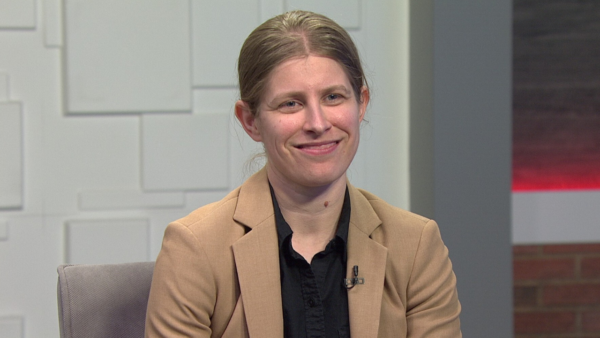
Dr. David Shprecher, Senior Movement Disorders Director at Banner Sun Health Research Institute, joined “Arizona Horizon” to discuss more about the recent study.
“This is the first study that has shown a strong association in people who have sleep apnea, then later going on to develop Parkinson’s Disease,” Dr. Shprecher said.
The specific type of sleep apnea used in the study is obstructive sleep apnea, which happens when muscles found in the back of the throat begin to relax during sleep. This relaxation of the throat can cut off the airway and cause sleep disturbances.
“We start to wake up into a lighter stage of sleep in order to continue breathing,” Dr. Shprecher said. “It really disrupts that deep stage of sleep that we need to get refreshed.”
Sleep apnea is already associated with a wide variety of other illnesses, such as high blood pressure and an increased chance of heart attacks or stroke. The new study revealed that the disruption of this sleep can have other health consequences for the body as well, such as in the case of Parkinson’s Disease.
“When we’re deep asleep … there’s a glymphatic system that clears toxins and proteins that need to be recycled out of the brain,” Dr. Shprecher said. ” When you don’t get deep sleep, that system can’t clean out those toxins, and they can build up in the brain and cause things like Alzheimer’s disease or Parkinson’s.”
Sleep apnea is traditionally treated with a CPAP machine, which applies pressure to the back of the throat and keeps the airway clear.
In this segment:
Also in this episode:
SPOTLIGHT





STAY in touch
with azpbs.org!
Subscribe to Arizona PBS Newsletters:
Gifts presented by Arizona PBS






Full Episode March 11
Arizona gas prices rise; fraud education for the elderly; newborns exposed to opioids