
ASU and SRP snowpack study begins
Jan. 21
Airborne Snow Observatories (ASO) has teamed up with ASU and the Salt River Project (SRP) on an innovative project to measure the snowpack across Arizona’s watershed. This project would help SRP manage our water reservoirs more effectively.
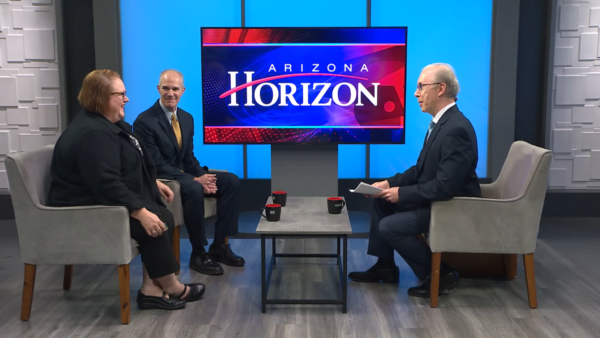
Enrique Vivoni, Fulton Professor of Hydrosystems Engineering at ASU, joined “Arizona Horizon” to discuss how this study and how it will impact the Phoenix water supply.
The study will focus on seven reservoirs supplying more than 2.5 million residents. SRP will be using planes rigged with state-of-the-art scanning lidar and imaging spectrometers measuring the snowpack and how much water it contains.
This advanced technology will be used for the first time in Arizona. On January 21, 2026, the first flight departed Safford, Arizona, for a 5 to 6 hour flight over northeastern Arizona. Depending on the weather, the two remaining flights will be scheduled over the next two months.
“We’re combining different methods to try to understand how much snow we have in Arizona,” Vivoni said.
Vivoni is also working closely with the U.S. Bureau of Reclamation, which funded the project, and ASO. The Airborne Snow Observatories run planes all over the Western U.S. to map snow, typically for water agencies to use those products to predict the amount of water to expect in the next season.
“It flew today, mapped the area around the upper Black River in the headwaters of the Salt River,” Vivoni said. “This plane is mapping in treacherous terrain. Not only is the terrain treacherous, but it’s also forested; this is mapping at a really high resolution.”
This mapping technology has been very beneficial for Vivoni and his colleagues, as they can measure how much snow there is, the depth, the amount of water in the snowpack and the snow color.
“The snow color tells us about how reflective the snowpack is to the sun’s rays,” Vivoni explained.
The plane has two sensors that hang from the bottom; one of the sensors uses Lidar. It sends out pulses of light, and it detects how fast those pulses of light travel to the surface, bounce off the snowpack and come back up.
“Next to it is an imaging spectrometer,” Vivoni said. “This is measuring the color of the snow, trees and other parts of the terrain, and for that we’re inferring other properties of the snowpack.”
Vivoni has some initial data already, as he expects this to be transferred to SRP and their crew fairly soon. As the aircraft was flying around, SRP sent their crew to take measurements of the ground to try to validate some of the measurements the aircraft takes.
In this segment:
Also in this episode:
SPOTLIGHT





STAY in touch
with azpbs.org!
Subscribe to Arizona PBS Newsletters:
Gifts presented by Arizona PBS







Full Episode March 5
Democrats fund races; Free Little Library; Pompeii exhibit




Full Episode March 4
Who controls Maricopa County elections; U.S. hockey win controversy; notMYkid milestone