
Jane Kamensky | American Revolution & History in Public Discourse
Nov. 16, 2022
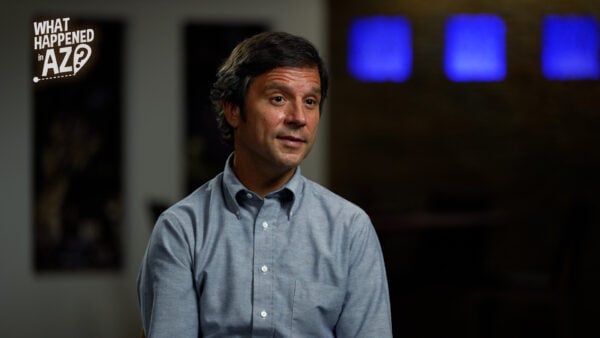
This week our host Henry got the chance to sit down with Jane Kamensky, Professor of History at Harvard University. Her book, “A Revolution in Color: The World of John Singleton Copley” was a central part of the discussion. Other major topics include how the American Revolution and history itself are being taught in schools and the resulting effect on public discourse.
While initially working on a book about another painter in earlier Colonial America, Kamensky became enthralled with the life and times of John Singleton Copley. Working in both colonial New England and London, Copley was a successful portrait artist for decades.
Kamensky elaborates, “I find him an extraordinary painter, but he also had the unusual quality of being an incredibly perceptive and committed witness on paper, which is not what an art historian needs, but what a historian needs.”
Another major point Kamensky related here were the shifts and changes we see in American identity over time. Henry even asks about how the identifying term ‘American’ gained footing in the late 1700’s.
Kamensky goes on to explain, “In the 1750’s Americans meant native, it’s the way that Locke used it, by the 1770’s there’s something in the common oppression of Americans as various kinds of imperial reformers see it, that it begins to give a shared language, a shared experience, a shared identity.”
In this interview, Kamensky talks about her opportunity to speak at ASU’s 2022 Annual Constitution Day. A central part of her discussion centers on challenging the perceived binary that American history is often viewed with. This includes adding deeper context to contradicting ideals like slavery versus liberty in early Colonial America.
“I think that both reverence and shame are sides of the same coin,” Kamensky says. “What we need from the past above all is truth, and truth is complicated because people are complicated. We are not less complicated than people in the past, people in the past are not less complicated than us, we all live according to the dictates of our times, some of which we can see very clearly and some of which we can’t.”
To hear more from this discussion with Harvard’s Jane Kamensky, be sure to check out this week’s latest episode of the Keeping it Civil podcast.
SPOTLIGHT





Nov. 14, 2025
Paul Johnson | What’s Right With America

Nov. 7, 2025
Andre Archie | The Virtue of Color-Blindness



Oct. 17, 2025
Patrick Griffin | The Age of Atlantic Revolution

Oct. 9, 2025
Aurelian Craiutu | Why Not Moderation?