Tchaikovsky’s Piano Concerto No. 1
Nov. 19, 2025
Romance, Resilience, and Russian Fire: Tchaikovsky and Rachmaninoff with The Phoenix Symphony
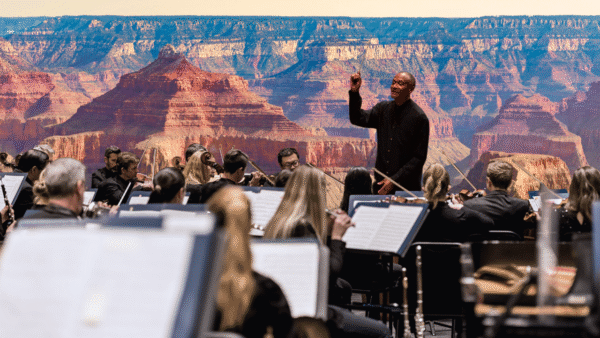
The next broadcast of The Phoenix Symphony captures the full emotional range of Russian Romanticism. Led by Venezuelan American conductor Ilyich Rivas, the orchestra joins forces with Macedonian pianist Simon Trpčeski for two of the repertoire’s towering masterpieces: Tchaikovsky’s Piano Concerto No. 1 in B-flat minor, Opus 23, and Rachmaninoff’s Symphony No. 2 in E minor, Opus 27. Together, they trace a musical journey from volcanic passion to luminous transcendence—works that defined an era and still move listeners more than a century later.
When Pyotr Ilyich Tchaikovsky completed his First Piano Concerto in 1874, he expected admiration from his friend Nikolai Rubinstein, the formidable pianist and director of the Moscow Conservatory. Instead, Rubinstein dismissed it as “worthless and unplayable.” Stung but undeterred, Tchaikovsky dedicated the work to Hans von Bülow, who premiered it in Boston the following year. The concerto’s thrilling opening chords and lyrical sweep instantly won over audiences. The version heard today is the 1889 revision, more refined but still filled with vitality and emotional reach. From the grandeur of its first movement to the tender Andantino and exuberant finale, the concerto remains a dazzling showcase of strength and sensitivity—qualities Simon Trpčeski brings to every performance.
If the Tchaikovsky Concerto speaks of defiance and youthful fire, Rachmaninoff’s Symphony No. 2 embodies redemption. After the disastrous reception of his First Symphony in 1897, Rachmaninoff suffered a creative collapse and sought help from Dr. Nikolai Dahl, whose therapy restored his confidence and led to the beloved Second Piano Concerto. With that success behind him, Rachmaninoff began the Second Symphony in Dresden in 1906, far from the distractions of Moscow and St. Petersburg. The symphony’s premiere two years later was a triumph, hailed as the composer’s artistic rebirth and proof that he had inherited Tchaikovsky’s mantle.
Rachmaninoff’s Second Symphony unfolds with sweeping grandeur and heartfelt introspection. Its brooding introduction sets the tone for a vast emotional landscape, while the scherzo brims with energy and rhythmic brilliance, including a fleeting appearance of the Dies irae chant that haunted much of his music. The slow movement glows with yearning lyricism, a love song without words, and the finale surges with rhythmic vigor toward an exultant close. Heard as a whole, it is a testament to resilience and the power of music to redeem despair.
Ilyich Rivas, who leads The Phoenix Symphony in this performance, made his professional debut at sixteen with the Atlanta Symphony Orchestra and has since conducted major ensembles across Europe and the Americas, including the London Philharmonic, Swedish Radio Symphony, Orchestre de la Suisse Romande, and Frankfurt Radio Symphony. Trained under Gustav Meier and Marin Alsop at the Peabody Conservatory and mentored by Vladimir Jurowski at Glyndebourne Festival Opera, Rivas has earned praise for his clarity, warmth, and interpretive insight.
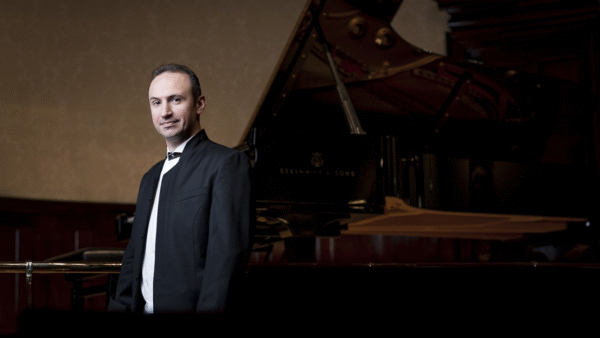
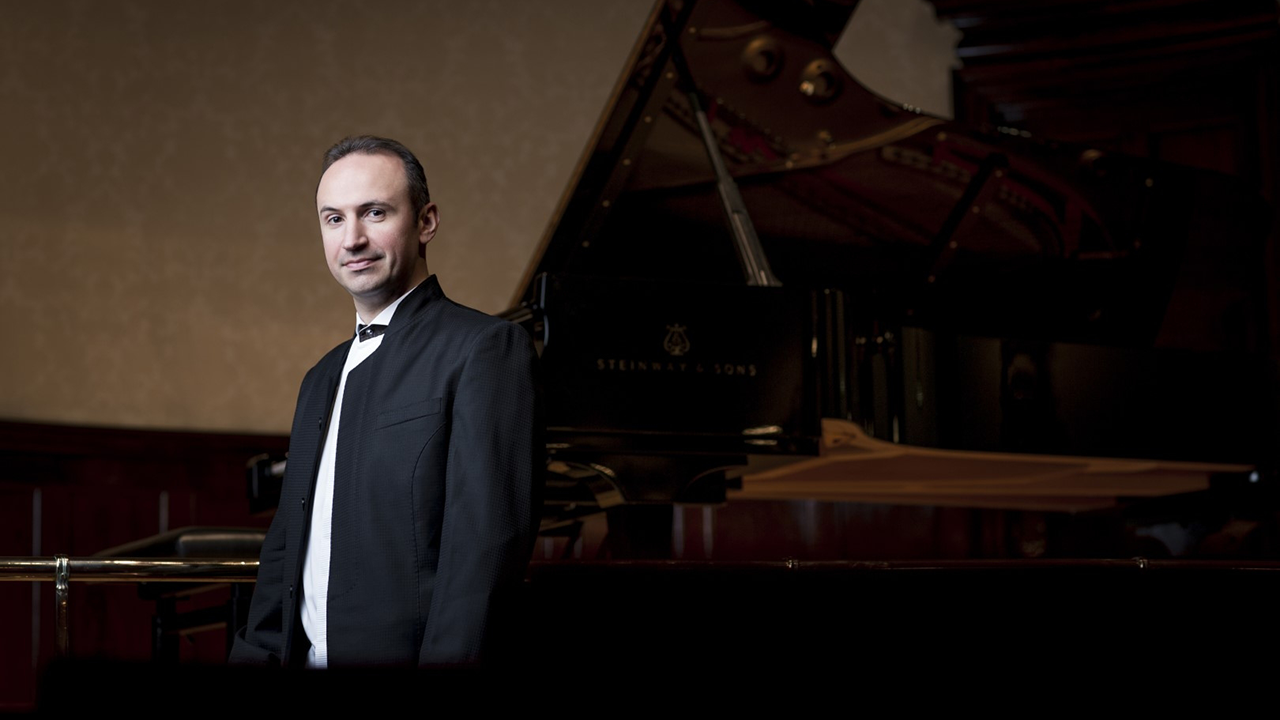
Simon Trpčeski, the featured soloist, is celebrated for his commanding technique and expressive depth. Born in Macedonia in 1979, he studied at the University of St. Cyril and St. Methodius in Skopje and gained international prominence as a BBC New Generation Artist. His career now spans collaborations with over a hundred orchestras worldwide, from Chicago to Amsterdam to London, and an acclaimed discography that ranges from Brahms to the folk-inspired Makedonissimo project, which showcases the music of his homeland.
Together, Rivas and Trpčeski illuminate two of Russia’s most enduring voices—composers who turned personal struggle into music of universal humanity. Their performance with The Phoenix Symphony reminds us why Tchaikovsky and Rachmaninoff remain central to the concert hall: both wrote from the heart, finding beauty and hope in the face of adversity.
Hear the next broadcast of The Phoenix Symphony every Wednesday evening at 7:00 on KNAU Arizona Public Radio, on DTV 8.5 Classical Arizona PBS, and on Classical 89.5 KBACH.
Featured in this episode:
Khachaturian – Suite No. 1 from Spartacus
- IV. Scene and Dance with Cotala
Tchaikovsky – Piano Concerto No. 1 – featuring Simon Trpčeski, piano
- I. Allegro ma non troppo e molto maestoso – Allegro on spiritoso
- II. Andantino semplice – Prestissimo – Tempo I
- III. Allegro con fuoco – Molto meno mosso – Allegro vivo
Shahov – Paprika Dance from Project Makedonissimo – Simon Trpčeski, piano
Rachmaninoff – Symphony No. 2
- I. Largo – Allegro moderato
- II. Allegro molto
- III. Adagio
- IV. Allegro vivace
Prokofiev – Concerto No. 3 in C Major for Piano and Orchestra, Op. 26 – Dmytro Choni, piano; Matthew Kasper, conductor
- I. Andante – Allegro