Brahms, Marsalis, and the Rhythm of Renewal
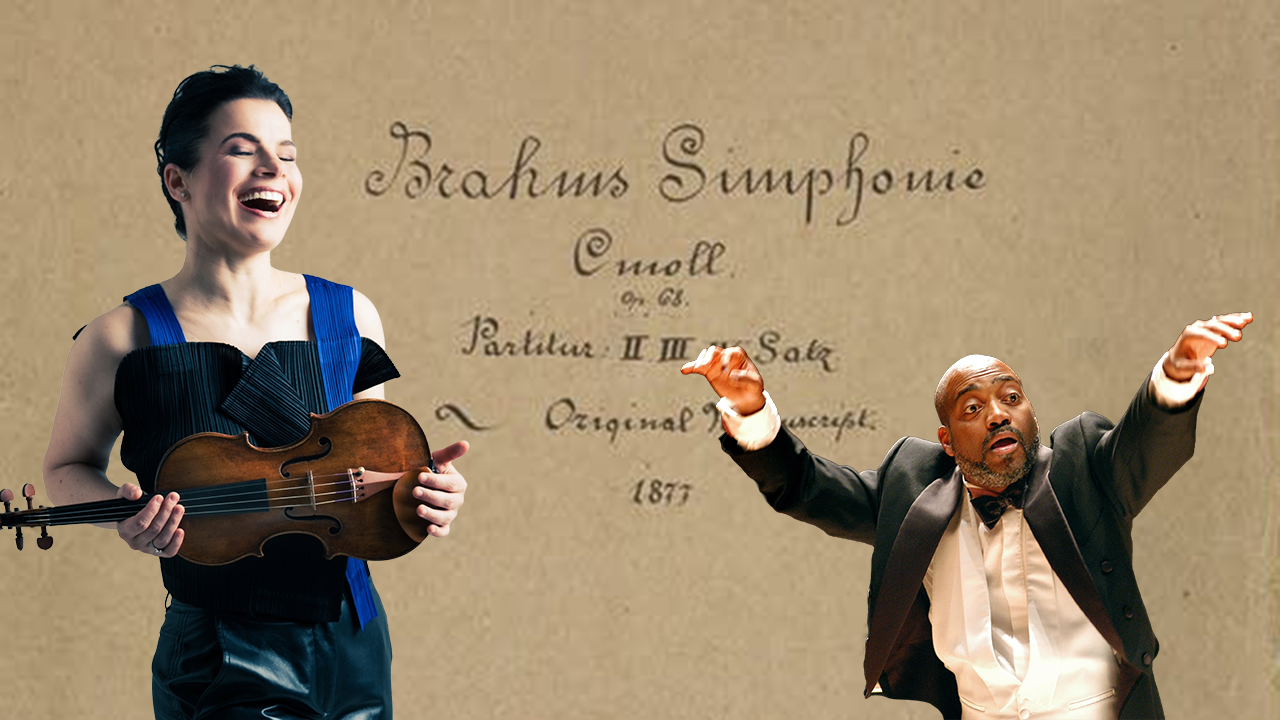
The Phoenix Symphony’s fifth broadcast of the season brings together three works that span continents, centuries, and sound worlds—from the pulsating rhythms of contemporary London to the soulful cadences of New Orleans, to the symphonic grandeur of 19th-century Vienna. Under the direction of guest conductor William Eddins, the program opens with Ayanna Witter-Johnson’s Blush, continues with Wynton Marsalis’s Violin Concerto in D featuring violinist Bella Hristova, and culminates in Johannes Brahms’s towering Symphony No. 1 in C minor, Op. 68.
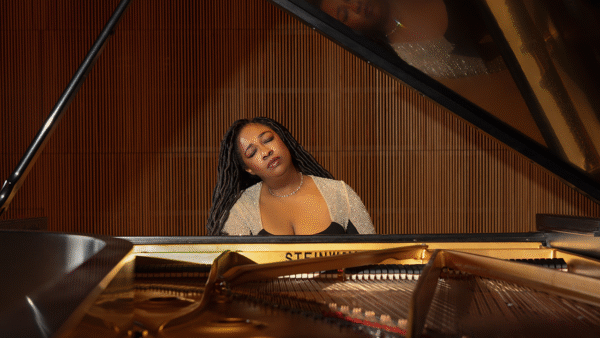
Ayanna Witter-Johnson’s Blush (2021) opens the program with vibrant energy and rhythmic charm. A second-generation Jamaican born in London, Witter-Johnson is a classically trained cellist, singer, and composer who fuses the sounds of her heritage with contemporary forms. Commissioned by Chineke! Orchestra, Blush tells the story of a young Caribbean woman at her first dance—hopeful, nervous, and filled with anticipation. Inspired by the rhythms of mento, an early Jamaican folk music, it pulses with syncopation and groove, embodying what Witter-Johnson calls “a celebration of rhythm and movement.” The result is a work that radiates warmth and humanity, inviting listeners to sway along while reflecting on universal themes of love and self-discovery.
Wynton Marsalis’s Violin Concerto in D, completed in 2015, follows with a rich blend of classical form and jazz sensibility. Marsalis, a Pulitzer Prize-winning composer and Artistic Director of Jazz at Lincoln Center, has long been celebrated for his ability to unite the worlds of jazz, blues, and classical music. Written for Scottish violinist Nicola Benedetti, the concerto draws connections between Scottish folk traditions and the roots of African-American music. Marsalis described the work as an exploration of shared ancestry, linking the spiritual and rhythmic threads of both traditions. Scored for full symphony orchestra but composed from the perspective of a jazz musician, the concerto demands extraordinary virtuosity and expressive range from its soloist. Its four movements trace an emotional and cultural journey: a dreamlike “Rhapsody,” a wildly syncopated “Rondo Burlesque,” a tender and deeply human “Blues,” and a jubilant finale titled “Hootenanny”—a barnyard celebration full of stomping rhythms, sly humor, and spontaneous joy.
In this performance, violinist Bella Hristova brings Marsalis’s creation to life with her luminous tone, dynamic precision, and interpretive depth. Praised by The New York Times for her “expressive nuance and rich tone,” Hristova has earned international acclaim as one of today’s most compelling violinists. Winner of the Avery Fisher Career Grant and the Michael Hill International Violin Competition, she has appeared as a soloist with leading orchestras around the world and is a passionate advocate for contemporary composers. Her artistry bridges virtuosity and vulnerability, making her an ideal interpreter of Marsalis’s genre-crossing masterpiece.
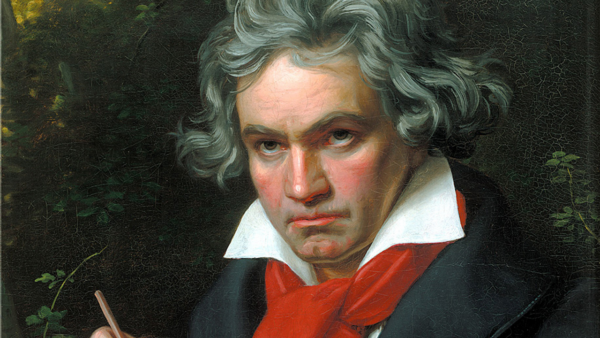
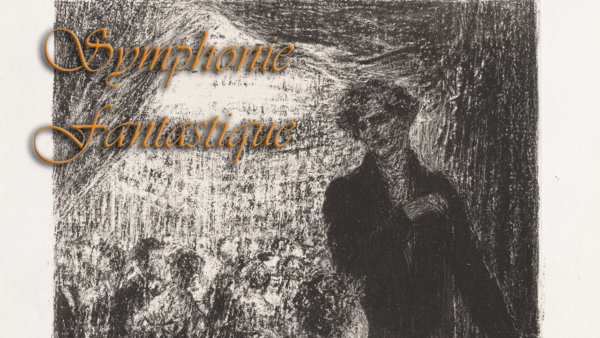
The program concludes with Brahms’s Symphony No. 1 in C minor, Op. 68, one of the great triumphs of the Romantic era. Brahms famously declared, “I shall never write a symphony—you have no idea what it’s like to hear a giant marching behind you.” That giant was Beethoven, whose symphonic legacy loomed over every composer who followed. Brahms wrestled with his First Symphony for nearly fifteen years, revising and refining it until its premiere in 1876. The result was a work of immense strength, discipline, and passion—music that carried the weight of history yet forged a path forward into the modern age.
The symphony begins with one of the most commanding openings in all orchestral literature: pounding timpani and low strings drive a sense of inevitability and struggle. From this dramatic beginning, Brahms unfolds a vast structure of conflict and resolution, weaving intricate counterpoint into an emotionally charged narrative. The second movement offers a moment of respite, its lyricism tender and intimate, while the third dances lightly with an almost pastoral grace. Then, in the finale, Brahms achieves transcendence. From the dark undertones of C minor emerges a radiant C major theme—a noble, hymn-like melody that many listeners have likened to Beethoven’s “Ode to Joy.” It is music of triumph and redemption, a hard-won victory that feels both personal and universal. At its premiere, critics dubbed it “Beethoven’s Tenth,” but over time it has come to be recognized as fully and profoundly Brahms: the work of a composer who transformed doubt into destiny.
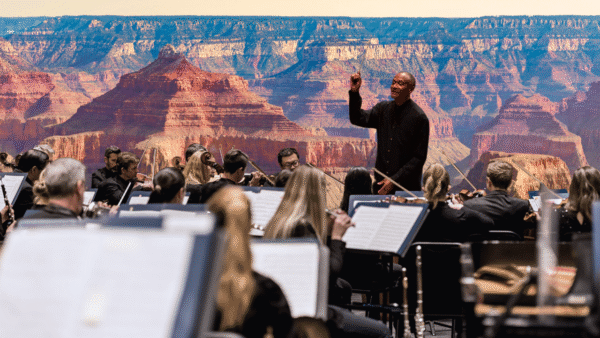
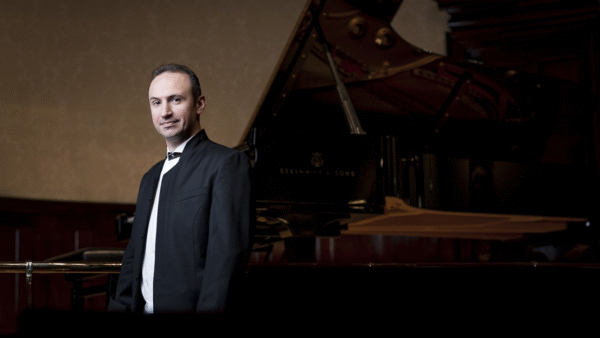
William Eddins, guest conductor for this program, is known for his dynamic presence on the podium and his versatility as both conductor and pianist. Music Director Emeritus of the Edmonton Symphony Orchestra, he has led major ensembles including the Philadelphia Orchestra, Los Angeles Philharmonic, and Royal Scottish National Orchestra, and is a frequent collaborator with Wynton Marsalis and Jazz at Lincoln Center. His wide-ranging experience—from classical masterworks to modern jazz—makes him a particularly fitting interpreter for a program that celebrates the intersections of rhythm, form, and freedom. Bella Hristova, the featured soloist, complements that breadth with her own artistry, bringing together deep musical insight and commanding technique. A frequent guest with the Chamber Music Society of Lincoln Center, she has performed at Carnegie Hall, the Kennedy Center, and concert halls throughout Europe, Asia, and New Zealand. Performing on a 1655 Amati violin, she continues to captivate audiences worldwide with performances that unite elegance, passion, and authenticity.
This performance is part of The Phoenix Symphony Broadcast Series, airing every Wednesday evening at 7:00 p.m. on KNAU Arizona Public Radio, in Dolby Digital Surround Sound on DTV 8.5 Classical Arizona PBS, and on Classical 89.5 KBACH. Each program is hosted by Mike Bolton, who guides listeners through the stories and artistry behind the music.
Featured in this episode:
Witter-Johnson – Blush
Bernstein – Three Dance Episodes from On The Town
- I. The Great Lover Displays Himself. Allegro pesante
- II. Lonely Town: Pas De Deux
- III. Times Square: 1944. Allegro
Marsalis – Violin Concerto – featuring Bella Hristova, violin
- I. Rhapsody
- II. Rondo Burlesque
- III. Blues
- IV. Hootenanny
Brahms – Symphony No. 1
- I. Un poco sostenuto – Allegro – Meno allegro
- II. Andante sostenuto
- III. Un poco allegretto e grazioso
- IV. Adagio – Piu andante – Allegro non troppo, ma con brio – Piu allegro