Characters from various sources have inspired a significant number of musical works. In many cases, the characters have been fictional, but they also include historical figures and even people from the composer’s own life. Characters from Shakespeare’s plays alone have inspired scores of composers — among them Tchaikovsky, Mendelssohn, Prokofiev, Sibelius, Schubert and – and their works are among some of the most recognizable and beloved of the repertoire.
“Characters” is the theme of this week’s program, and all but one of them is fictional. The exception is William Grant Still’s Lyric Quartette: A Musical Portrait of Three Friends.
Czech-born composer Jaromir Weinberger’s Polka and Fugue from the opera Swanda the Bagpiper start off the program. Swanda, based on a folk tale, is a master bagpiper nearly led astray by a robber. The work was instantly popular in Europe after its 1927 premiere and soon became a favorite of American orchestras and bands as well. It was even the music for a ballet performed at the 1939 New York World’s Fair. The ASU Wind Ensemble, conducted by Jason Caslor performs.
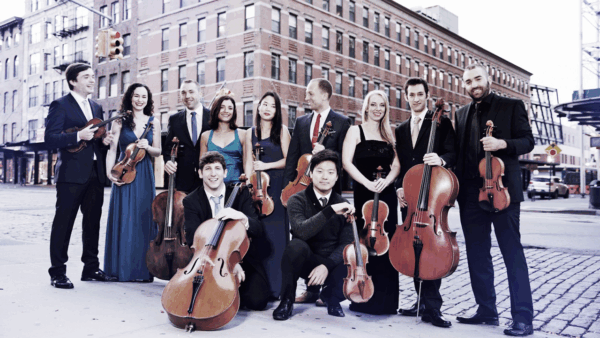
Known as the Dean of African-American composers, William Grant Still lived from 1895 to 1978, and along with his classical training, the blues and jazz music he performed throughout his young adulthood influenced his compositions. Also evident in Still’s use of timbre, texture and dynamics is the influence of musical impressionism that had become a dominant force in Western music during Still’s time. And his musical portrayal of his “jovial” friend in the third movement, with its increased dissonance and dramatic tempo changes, may reflect the influence of his “modernist” friend and mentor, Edgar Varese. Performing Still’s work Lyric Quartette is the well-known Grammy-award-winning Catalyst Quartet.
Characters from the Baroque period are also represented this week, with Francois Couperin’s Les Sylvains, or “forest people,” performed by harpsichordist Leon Schelhase and theorbo player Daniel Swenburg, Couperin, also known as “Le Grand Couperin,” is considered the father of French keyboard music, and among the composers his hundreds of compositions influenced were Bach, Handel and Telemann.
Three of this week’s composers were born in the late 19th century, including Maurice Ravel, whose music fills the second half of the program. Ondine, a beautiful and seductive water nymph, is the subject of the second movement of Ravel’s Gaspard de la Nuit, or Treasurer of the Night. Performing this shimmering virtuosic piece is the then 21-year-old pianist Yang (Jack) Gao, whose performance won second-place winner at the 11th Bosendorfer US-ASU International Piano Competition in January 2025.
Another Ravel favorite, Ma Mere L’Oye, or Mother Goose Suite, rounds out this week’s program. Saxophonist Steven Banks and pianist Xak Bjerken perform, and Banks seems the accomplish his stated goal from this statement, “I am obsessed with creating a sound world with my instrument that transcends description.” As with Ondine, Ravel’s superb use of harmony, melody and musical “color” are on full display.
Featured in this episode:
Weinberger – Schwanda the Bagpiper: Polka and Fugue – ASU Wind Ensemble; Jason Caslor, conductor
Still – Lyric Quartet – Catalyst Quartet
- I. The Sentimental One
- II. The Quiet One
- III. The Jovial One
Couperin – Les Sylvain – Leon Schelhase, harpsichord; Josefien Stoppelenburg, soprano; Daniel Swenberg, theorbo; Sarah Walder Amata, viola da gamba/baroque
Ravel – Gaspard de la Nuit – Yang (Jack) Gao
- I. Ondine
Ravel – Ma Mere L’Oye – Steven Banks, saxophone; Xak Bjerken, piano
- I. Pavane de la Belle au bois dormant. Lent
- II. Petit Poucet. Tres modere.
- III. Laideronnette, Imperatrice des pagodes. Mouvement de marche
- IV. Les entretiens de la Belle et de la Bete. Mouvement de valse modere
- V. Le jardin feerique. Lent et grave