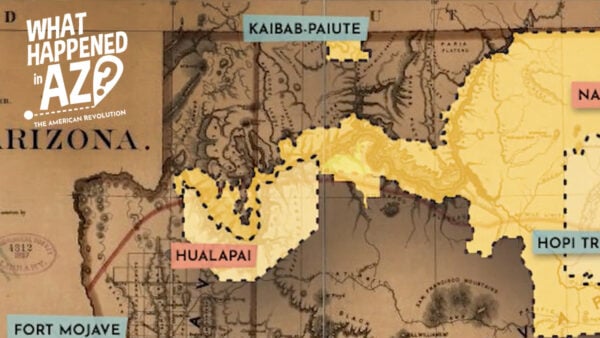
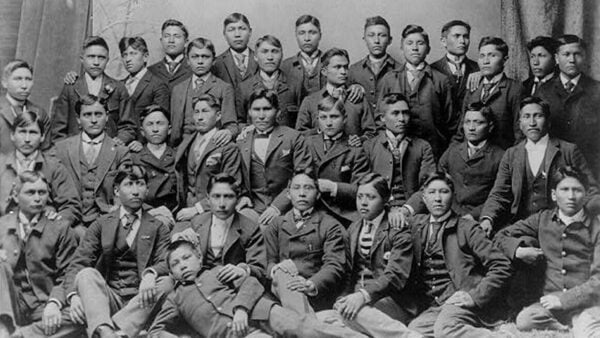
For generations, the Yavapai-Apache people have demonstrated remarkable resilience in the face of profound challenges. From forced removals and the loss of ancestral lands to government policies aimed at assimilation, their history is one of survival, adaptation and determination.
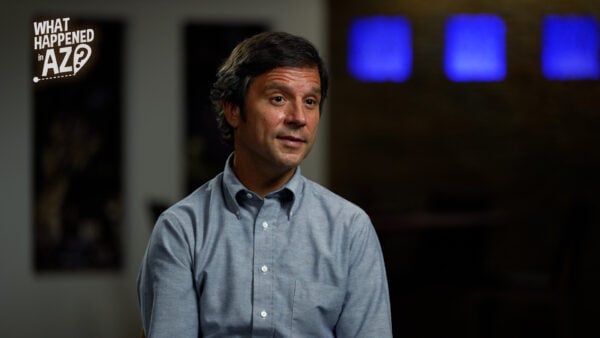
In this episode of “What Happened in Arizona?,” we reflect on the ongoing work of preserving culture, traditions and identity. They share how language revitalization efforts, traditional ceremonies, storytelling and cultural education help keep their heritage alive for future generations.
The preservation of culture is more than remembering the past; it is an active commitment to the future. Elders pass down knowledge, values and practices to younger generations, ensuring that the customs that have defined the Yavapai-Apache people for centuries continue to endure. Community gatherings, traditional foods, songs, dances and spiritual connections to the land all play a vital role in maintaining cultural continuity.
This conversation also explores the challenges Indigenous communities face in balancing modern life with cultural preservation. Despite these obstacles, the Yavapai-Apache people continue to strengthen their identity and celebrate the traditions that connect them to their ancestors.
Through personal stories and historical insight, learn about the strength, perseverance and cultural pride of the Yavapai-Apache Nation. Their experiences offer a powerful reminder that survival is not simply enduring hardship: it is preserving the knowledge, language and traditions that define a people.
Corporate funding for THE AMERICAN REVOLUTION was provided by Bank of America. Major funding was provided by The Better Angels Society and its members Jeannie and Jonathan Lavine with the Crimson Lion Foundation; and the Blavatnik Family Foundation. Major funding was also provided by David M. Rubenstein; The Robert D. and Patricia E. Kern Family Foundation; Lilly Endowment Inc.; and the following Better Angels Society members: Eric and Wendy Schmidt; Stephen A. Schwarzman; and Kenneth C. Griffin with Griffin Catalyst. Additional support for THE AMERICAN REVOLUTION was provided by: The Arthur Vining Davis Foundations; The Pew Charitable Trusts; Gilbert S. Omenn and Martha A. Darling; Park Foundation; and the following Better Angels Society members: Gilchrist and Amy Berg; Perry and Donna Golkin; The Michelson Foundation; Jacqueline B. Mars; Kissick Family Foundation; Diane and Hal Brierley; John H. N. Fisher and Jennifer Caldwell; John and Catherine Debs; The Fullerton Family Charitable Fund; Philip I. Kent; Gail Elden; Deborah and Jon Dawson; David and Susan Kreisman; The McCloskey Family Charitable Trust; Becky and Jim Morgan; Carol and Ned Spieker; Mark A. Tracy; and Paul and Shelley Whyte. THE AMERICAN REVOLUTION was made possible, in part, with support from the Corporation for Public Broadcasting.