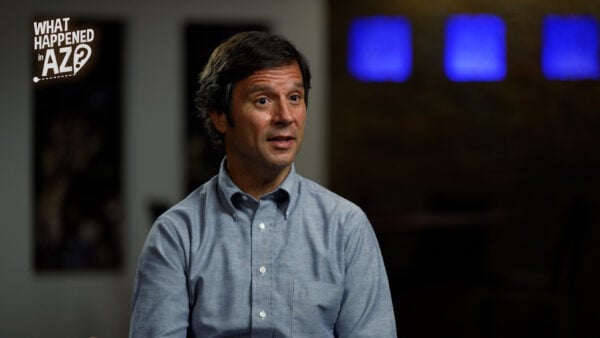
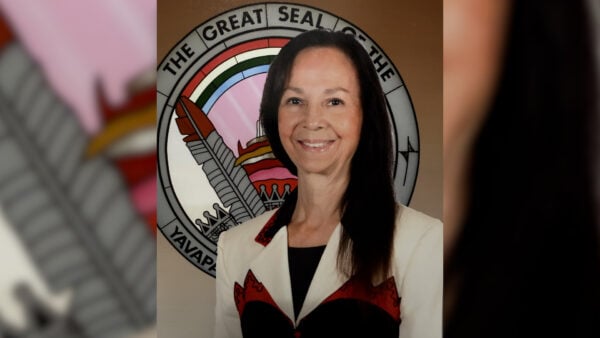
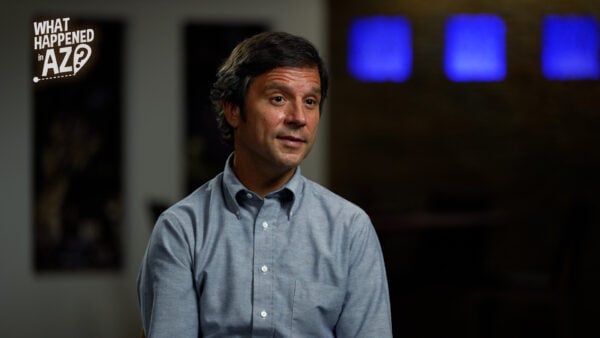
You can’t tell the history of the United States without Indigenous peoples. They’re in every episode of American history. Dr. Maurice Crandall, Associate Professor of History at ASU and a citizen of the Yavapai-Apache Nation, explains.
In this edition of “What Happened in AZ,” we explore the importance of preserving Indigenous stories, historical knowledge, languages and cultural traditions. Through education, storytelling, community engagement and cultural preservation efforts, Indigenous leaders, elders, educators and advocates are ensuring valuable knowledge continues to be shared with future generations.
For generations, Indigenous communities have passed down stories, knowledge, traditions and cultural practices that help define their identities and preserve their histories. These stories are more than memories; they are living connections between the past, present and future.
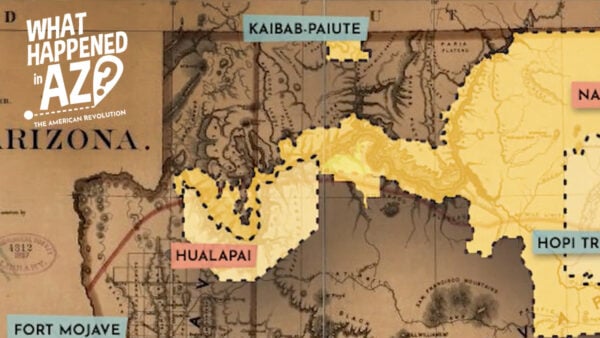
Native peoples are central to American history, a story that cannot be told without them. The land the United States is founded upon is Indigenous land, and Indigenous peoples still live here and are still connected to that land. There’s a long history of Native and non-Native interaction, including diplomacy and treaty making as well as conflict and colonization.
Even in the early days of the country, Indigenous peoples were involved. Some fought for the patriot side during the American Revolution, while others fought for the British side.
Dr. Crandall suggests we need Native American history in order to have a complete story of our country, from before the founding right up to the present day.
Corporate funding for THE AMERICAN REVOLUTION was provided by Bank of America. Major funding was provided by The Better Angels Society and its members Jeannie and Jonathan Lavine with the Crimson Lion Foundation; and the Blavatnik Family Foundation. Major funding was also provided by David M. Rubenstein; The Robert D. and Patricia E. Kern Family Foundation; Lilly Endowment Inc.; and the following Better Angels Society members: Eric and Wendy Schmidt; Stephen A. Schwarzman; and Kenneth C. Griffin with Griffin Catalyst. Additional support for THE AMERICAN REVOLUTION was provided by: The Arthur Vining Davis Foundations; The Pew Charitable Trusts; Gilbert S. Omenn and Martha A. Darling; Park Foundation; and the following Better Angels Society members: Gilchrist and Amy Berg; Perry and Donna Golkin; The Michelson Foundation; Jacqueline B. Mars; Kissick Family Foundation; Diane and Hal Brierley; John H. N. Fisher and Jennifer Caldwell; John and Catherine Debs; The Fullerton Family Charitable Fund; Philip I. Kent; Gail Elden; Deborah and Jon Dawson; David and Susan Kreisman; The McCloskey Family Charitable Trust; Becky and Jim Morgan; Carol and Ned Spieker; Mark A. Tracy; and Paul and Shelley Whyte. THE AMERICAN REVOLUTION was made possible, in part, with support from the Corporation for Public Broadcasting.