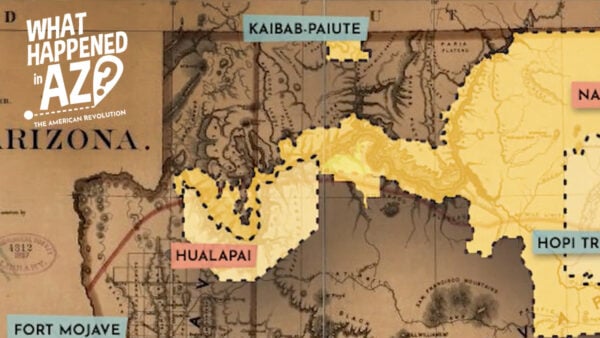
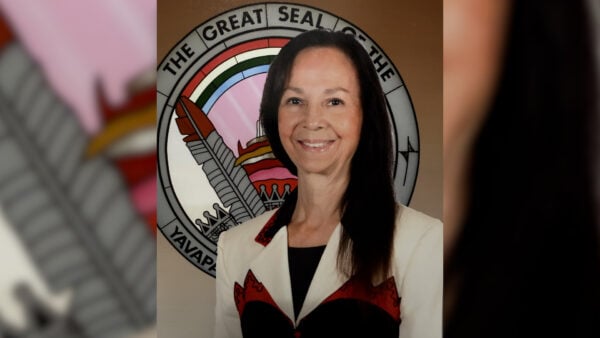
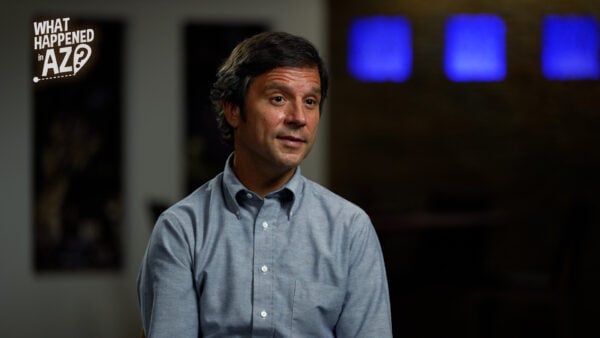
Many Indigenous communities have a complex relationship with reservation life. As Dr. Maurice Crandall of the Yavapai-Apache Nation shares, reservations can represent resilience, cultural survival and community. At the same time, they can also carry painful reminders of displacement from sacred lands, traditional homelands and important cultural sites.
The question lies at the intersection of Indigenous history, tribal sovereignty and the lasting effects of federal policies that forced tribes onto reservation land. In many cases, modern reservations are distant from the tribe’s ancestral land, and in all cases, reservations are much more limited in size. Spiritual connections to sites that are not controlled by the tribe must be navigated with an eye to the sacred sites are now on private or federal land.
Yet, as Dr. Crandall describes, reservations are also communities, places of celebration and belonging for the families that live there and the relatives who return.
This episode of “What Happened in AZ?” offers an educational and thoughtful perspective on the emotional and historical complexities surrounding reservations and the importance of protecting Indigenous sacred sites for future generations.
Watch more stories from Arizona PBS exploring Native American history, Indigenous voices, tribal communities and the people shaping Arizona today.
Corporate funding for THE AMERICAN REVOLUTION was provided by Bank of America. Major funding was provided by The Better Angels Society and its members Jeannie and Jonathan Lavine with the Crimson Lion Foundation; and the Blavatnik Family Foundation. Major funding was also provided by David M. Rubenstein; The Robert D. and Patricia E. Kern Family Foundation; Lilly Endowment Inc.; and the following Better Angels Society members: Eric and Wendy Schmidt; Stephen A. Schwarzman; and Kenneth C. Griffin with Griffin Catalyst. Additional support for THE AMERICAN REVOLUTION was provided by: The Arthur Vining Davis Foundations; The Pew Charitable Trusts; Gilbert S. Omenn and Martha A. Darling; Park Foundation; and the following Better Angels Society members: Gilchrist and Amy Berg; Perry and Donna Golkin; The Michelson Foundation; Jacqueline B. Mars; Kissick Family Foundation; Diane and Hal Brierley; John H. N. Fisher and Jennifer Caldwell; John and Catherine Debs; The Fullerton Family Charitable Fund; Philip I. Kent; Gail Elden; Deborah and Jon Dawson; David and Susan Kreisman; The McCloskey Family Charitable Trust; Becky and Jim Morgan; Carol and Ned Spieker; Mark A. Tracy; and Paul and Shelley Whyte. THE AMERICAN REVOLUTION was made possible, in part, with support from the Corporation for Public Broadcasting.