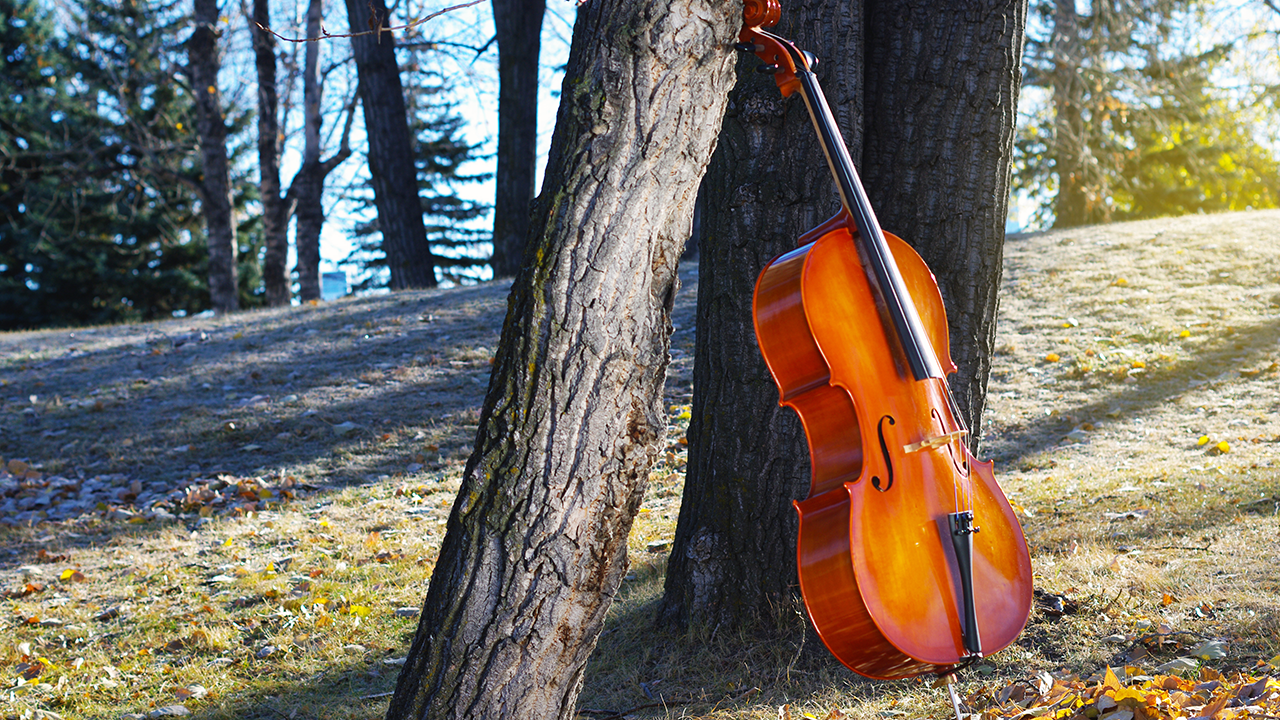
In this episode of Arizona Encore, we’ll explore the remarkable versatility of the cello, a stringed instrument frequently likened to the human voice for its resonant, expressive range. Our program journeys through the twentieth century, highlighting how composers have utilized the cello’s unique character to span diverse musical landscapes ranging from the lyrical intensity of the Romantic era to experimental, vocal-like textures.
We begin with Sergei Rachmaninoff’s Sonata for Cello and Piano in G Minor, Op. 19, a deeply expressive work that treats both instruments as equal partners. We’ll then listen to Gabriel Fauré’s Sonata No. 2 in G Minor, Op. 117, which evolved from a somber funerary march that Fauré originally composed under duress.
After the break, the program continues with an arrangement of Hungarian composer Zoltan Kodaly’s Tricinia, a pedagogically-oriented work intended to introduce young music students to the qualities of Hungarian folk music. Finally, we conclude with Jon Deak’s Metaphor, an innovative work that pushes the boundaries of musical expression by pairing the cello with the spoken word.
Featured in this episode:
Rachmaninoff – Sonata for Cello and Piano n G Minor, Op. 19 – Alexander Shtarkman, piano; Yehuda Hanani, cello
- I. Lento-Allegro moderato
- II. Allegro scherzando
- III. Andante
- IV. Allegro mosso
Faure – Sonata for Cello and Piano No. 2 in G Minor, Op. 117 – Melita Hunsinger, cello; Olga Gorelik, piano
- III. Finale: Allegro vivo
Kodaly – Selections from Ten Trios for Three Celli – Brook Speltz, cello; Jacob Fowler, cello; David Speltz, cello
Deak – Metaphor for solo cello and narrator – Rhonda Rider, cello; Clare Hoffman, narrator