Each year, the release of Maricopa Association of Government’s (MAG) Point-in-Time (PIT) Count draws attention to one of the most pressing issues facing the community: homelessness. The overall count remained nearly flat from last year, while the unsheltered count decreased by 12% and the sheltered count increased by 14%.
That is important progress, and it suggests more people were connected to shelter. But it does not mean the homelessness crisis has been solved, nor does it mean the PIT Count captures everyone experiencing homelessness over the course of a year. This year’s count, which identified people experiencing homelessness in Maricopa County on the night of Jan. 26, 2026, found 9,726 individuals experiencing homelessness in Maricopa County. The PIT count captures only those who are experiencing homelessness during one specific night.
Research has shown that the number of people who experience homelessness over the course of a year can be 2.5 to 10 times higher than what is captured on a single night through the PIT count.
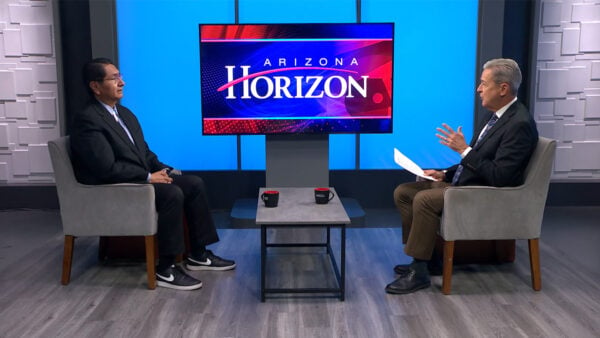
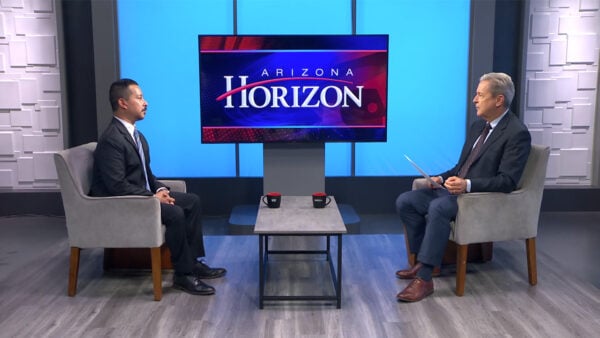
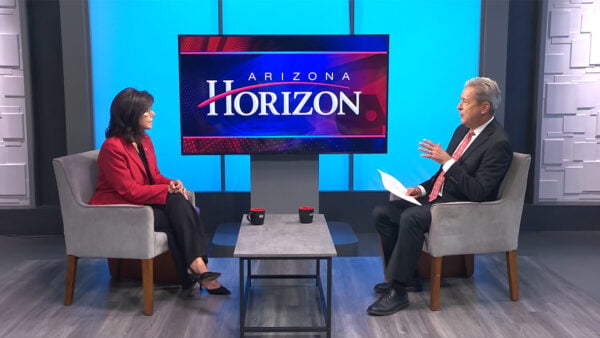
Tanner Swanson, Marketing Director of the non-profit “A New Leaf”, joined “Arizona Horizon” to discuss the true progess that has been made.
“I think, you know the biggest things hiding the crisis are ones that keep people out of the PIT count, right. It’s different generations moving into apartments where you have 8, 9, 10 people living in a two bedroom apartment, right. That’s very difficult, and that’s where the kids are, right. It’s people living in their cars and you know posting up for the night in a Walmart or something. And those are the people that we’re not counting, and these are tens of thousands of people” Swanson said.
The limitations of the PIT count may hinder the effectiveness of legislation and other efforts that are aimed to support those experiencing homelessness, according to Swanson.
“But the broader discussion, the statewide discussion, the regional discussion here in The Valley can be dictated by this more limited number. And that’s really what we at A New Leaf wanted to speak out about is, you know it’s a bigger number than most people think,” Swanson said.
Swanson shared that a way to get a better and more well-rounded look into the numbers of those experiencing homelessness is to augment the data with information from other data sources. Including the Department of Education and prison systems.
“There are states that have done that and it’s given them a more accurate prediction of homelessness and it’s allowed them to combat the challenge better. You know investing in affordable housing, homelessness courts.where you’re preventing people just cycling into the prison system, all these different solutions. But that takes good data,” Swanson said.