Arizona bill could force school districts to increase teacher pay
April 14
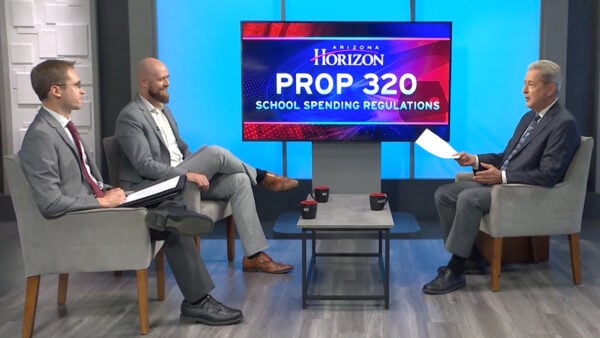
A new bill could require Arizona public school districts to spend 60% of their budgets on teacher salaries and “direct instructional expenses.”
Public schools spend about 52.1% of their budgets on instructional expenses including teacher pay, teacher’s aides and substitutes, according to the Arizona Auditor General.
Sen. Jake Hoffman (R-Queen Creek) was the author of SCR 1032. If passed, it would mandate school districts to increase teacher salaries. Districts would have six years to reach that goal, but if districts are unable to meet it, funding could be slashed from their budgets.
For the first year a school district doesn’t meet the requirement, it would lose 25% of its classroom budget. If the requirement was not met a second year there would be a 50% budget loss, a third year would be a 75% budget loss and a fourth year would be a complete budget loss.
The state superintendent of public instruction would be able to grant a school district two waivers within a ten-year period, if the requirement is not met.
“We want to make sure that the money is flowing through to classrooms that is flowing to direct instructional expenses. If you can’t comply within six years, if (you) can’t pay your teachers well within 6 years,” Hoffman said during a Senate session on March 23. “We think that there should be a penalty and this does a reasonable approach to enacting such penalties.”
Hoffman said this bill would help teachers get the raises they need and that more money needed to flow into classrooms.
“You’d think nearly $17 billion would be enough for that, but it’s not, because (the) K-12 government runs schools. And the administrators, they like to build kingdoms,” Hoffman said. “They hire incredible amounts of staff, that are not in the classroom, that are not directly impacting students. And meanwhile, it’s teachers who get the shaft,” he said.
According to an Arizona Auditor General report found that school districts spend about 10.2% of their budgets on administrative costs that include operational like payroll, purchasing and data processing.
Arguments against teacher pay bill
During the same Senate hearing, Sen. Mitzi Epstein (D-Tempe) said the bill wants to “micromanage” school districts instead of allowing elected local school board leaders to make those decisions.
“This bill comes in and says, ‘Wham bam, you can’t do it because this senator wants you to do something else,’” Epstein said.
“This is not the right way, so this is a terrible idea, because it destroys the voice of the people, but secondarily because it seems to think that charter schools are not public schools,” she said.
Epstein and other Democrats who opposed the bill argued that it was just another method of underfunding public schools, while not placing any of those same regulations on charter or schools that receive ESA funds.
“Why oh why are they only cutting money from district schools? Charter schools will not be affected. ESAs will not be affected, but district schools would be cut and we’re sick and tired of the cuts from that side of the aisle (Republicans),” Epstein said.
“Study after study, after study shows that things like technology support, counselors, nursing and all of those kinds of support contribute to the academic success of children and this bill says they don’t care. They just want an arbitrary percentage. This is not the smartest bill I’ve ever seen,” Epstein said.
The bill passed the Arizona Senate and will go before voters on the November ballot if the House of Representatives passes it.

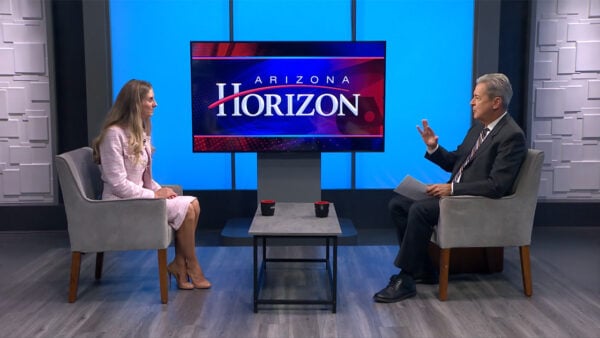
Reporting by “Arizona Horizon” Education Solutions Reporter Roxanne De La Rosa. Her role is made possible through grant funding from the Arizona Local News Foundation’s Arizona Community Collaborative Fund and Report for America.