ASU’s new compact X-ray device tests scientific boundaries
Oct. 20, 2025
The compact X-ray free electron laser (CXFEL) will see things that cannot be seen with conventional X-rays. Its elaborate process will enable scientists to peer into atomic and molecular-scale structures with unmatched clarity.
Since their discovery 125 years ago, X-rays have helped heal broken bones, aided airport security efforts, and kept critical infrastructure safe. Now, Arizona State University scientists have completed a series of experiments to solve their very first protein structure on a one-of-a-kind X-ray instrument: the compact X-ray light source (CXLS).
The CXLS could lead to the discovery of better drugs with fewer side effects, improve medical imaging technologies, aid semiconductor manufacturing to build ever more powerful chips or quantum materials, and lead to more eco-friendly bioenergy applications.
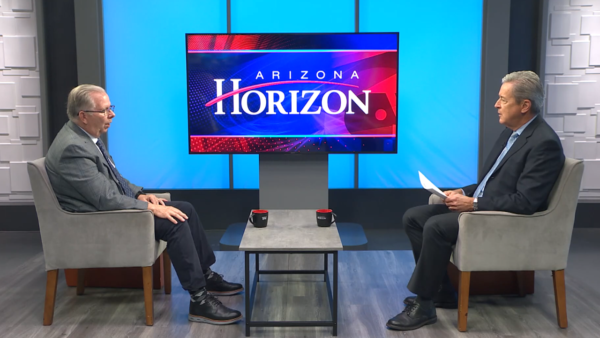
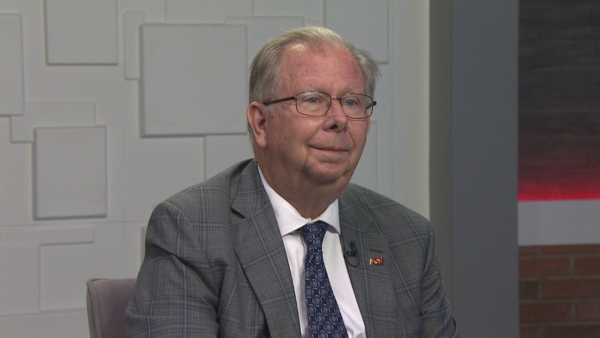
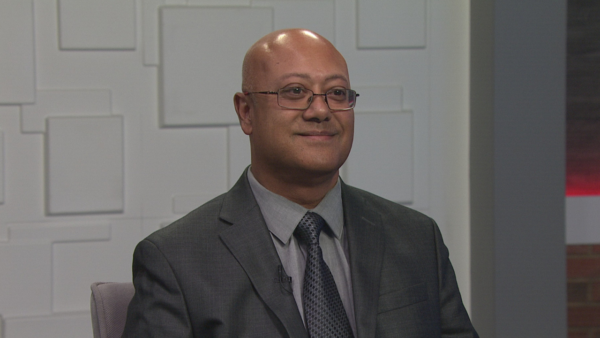
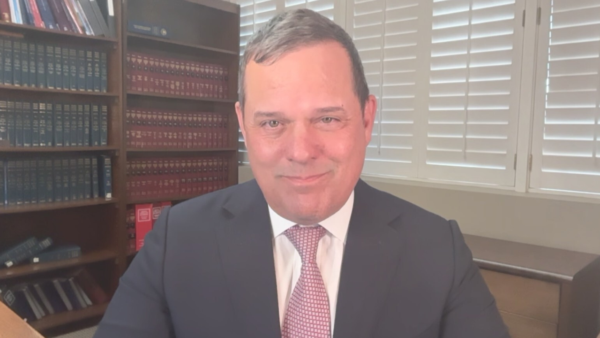
Arvinder Sandhu, the CXFEL Lab Director, joined “Arizona Horizon” to provide more information on the development of this experimental compact X-ray device.
Sandhu emphasized the device’s unprecedented capabilities, stating, “CXFEL is a unique machine which is first of its kind in the world, and what we’re doing is combining very high-power laser technology with miniature accelerators to produce X-rays that can help us see the atomic scale.” This new clarity allows researchers to capture “movies off the molecules as they’re in process of undergoing chemical reactions or transformation.”
The true importance of the CXFEL lies in its accessibility and resulting impact. Unlike kilometer-long, billion-dollar predecessors, Sandhu proudly shared, “It is a 30-foot-long machine, and it costs millions; it’s accessible to everyone.”
The resulting applications are vast, particularly in medicine. Sandhu noted the direct impact on therapeutics when he explained, “If you understand the protein structure, you can design drugs that bind to the specific structure, which helps in devising new drugs like for Alzheimer’s. You can do medical imaging with much less dosage of X-rays.”
With the success of achieving their first milestone, Sandhu ultimately hopes that CXFEL can be used more commonly.
“It is so successful, we want to make it so accessible, you can have them not just in university labs. You can have them in hospitals, in industry, so everyone can have access to the technology, which is currently limited to a few facilities in the world,” said Sandhu.
In this segment:
Also in this episode:
SPOTLIGHT






Full Episode March 31
U.S. rental prices down; new book on Don Bolles; Heidi’s Village pet rescue
March 30
ASU lab explores interior of planets