Constitution firm on two-term limit, despite Trump comments
Nov. 4, 2025
President Donald Trump has expressed interest in pursuing a third term in office, despite the 22nd Amendment clearly limiting presidents to two elected terms. Some supporters have floated unconventional ways he might run again, but constitutional scholars say there is no legitimate path to a third term under current law.
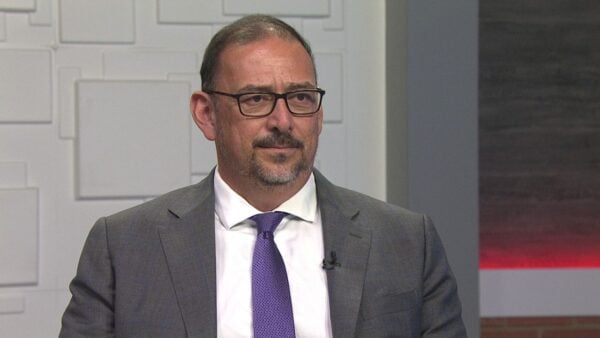
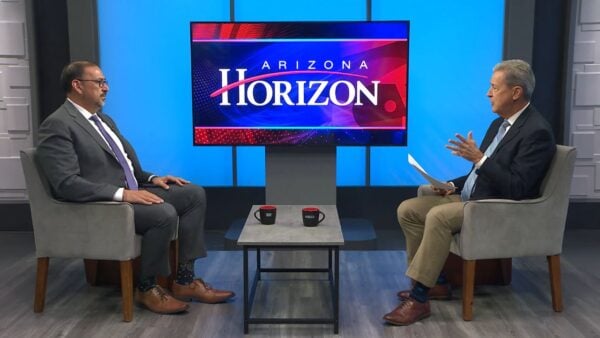
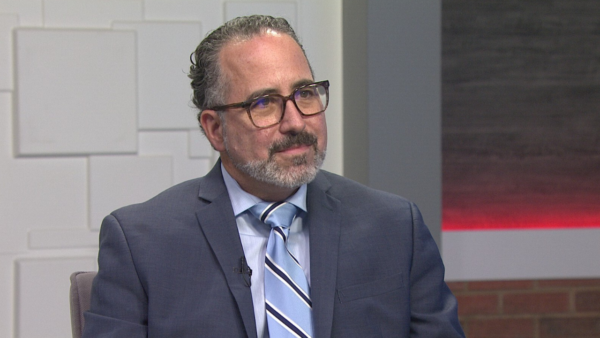
Roy Herrera joined “Arizona Horizon” to explain the legal framework surrounding presidential term limits and what Trump’s comments could mean moving forward.
“I think the short answer to that is no,” he explained. “The 22nd Amendment was designed to prohibit anyone from serving more than two terms as president.”
The language of the amendment is central to the debate.
“What the language says is that no person shall be elected to the office of the president more than twice,” Herrera said.
Supporters such as Steve Bannon have argued that this wording leaves room for a distinction between being elected and serving, but Herrera said legal scholars reject that interpretation.
“The whole point of the 22nd Amendment is to prevent anyone who has already served two terms from serving anything more than that,” he said.
Other scenarios raised — including a vice-presidential succession plan engineered to reinstall Trump — run into the same legal barrier.
“Most legal scholars would say there is no distinction between elect and serve,” Herrera emphasized. Allowing such a loophole “defeats the whole purpose of the 22nd Amendment.”
Even ideas about a president declaring a national emergency to suspend elections fall apart legally. “There is no process legally for that to occur,” Herrera said. “There is no situation where he could simply declare a national emergency and say, ‘I’m going to stay on.’”
Politically, Herrera said Trump’s comments may be aimed at avoiding lame-duck status.
“This could be a method of him trying to hold on to that power,” Herrera said. “At the end of the day, it’s about self-aggrandizement… the idea that only he can serve in the way that he does.”
Legally, however, Herrera was unequivocal: “There are all kinds of roadblocks,” he said. “Ultimately, I don’t think it’d be successful.”