Recent data from the National Cancer Institute shows Arizona has a higher rate of melanoma than the rest of the nation. In particular, there’s been an increase in the number of people diagnosed with skin cancer over the age of 50.
What is behind Arizona’s high melanoma rate, and why is it hitting the older population harder?
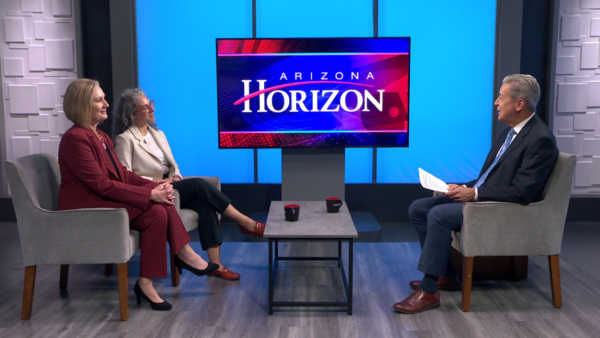
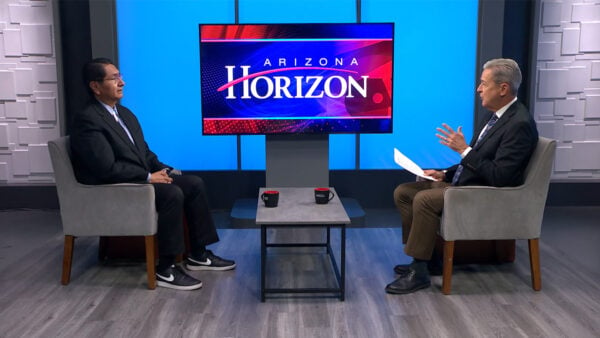
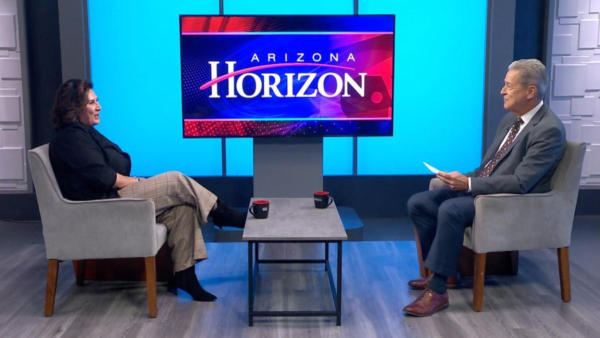
Dr. Jordan Abbott, Dermatologist at Banner MD Anderson Cancer Center, joined “Arizona Horizon” to discuss how to begin preventative measures.
To begin, Dr. Abbott explained melanoma is a type of skin cancer and is the third most common type of skin cancer. However, it is the one that spreads internally and could be the most serious.
“Most of the time, Basal cell carcinoma and Squamous cells are detected at a really early stage,” said Dr. Abbott, which makes them easy to simply cut or burn off. “However, for Melanoma, about half of the cells are detected where they’ve already spread through the top layer of the skin.”
Once Melanoma spreads through the top layer of the skin, there is more potential that it will spread to the lymph nodes or other parts of the body.
“It is a disease that can spread quickly, and so that’s why we are really aware of making that diagnosis and intervening early,” said Dr. Abbott.
Melanoma is known to be found in areas of the body that get the most exposure to sun. It is a condition that you see on areas that have chronic or intermittent sun exposure. For women, Melanoma can be found mostly on the legs compared to men where it can be found on the back.
“Melanoma is a little bit tricky; every Melanoma looks different,” said Dr. Abbott. “However there are things to look for; a dark spot can definitely be a sign of Melanoma; 30% of Melanoma can also develop in a pre-existing mole.”
Risk factors include UV rays, but genetics and family history does play a role in the disease. Around 10% of people who develop Melanoma have a genetic component. Using sunscreen and getting screenings are beneficial in lowering the risk of skin cancer.
“Sunscreen is so important, and it’s your opportunity to really protect yourself from the sun and UV rays that we know are linked with melanoma,” said Dr. Abbott.