Symphonie Fantastique
Nov. 5, 2025
Dreams, Despair, and Daring: Berlioz’s Symphony Fantastique
This week’s broadcast offers one of the most audacious musical journeys ever composed: Hector Berlioz’s Symphonie fantastique. Joining the program are Gabriela Ortiz’s Téenek: Invenciones de Territorio and Maurice Ravel’s Concerto in G major for Piano and Orchestra, performed by the brilliant pianist Denis Kozhukhin. The Phoenix Symphony is led by guest conductor Robert Treviño.
The concert begins with Téenek—Invenciones de Territorio by the Mexican composer Gabriela Ortiz, a work that asks profound questions about identity, belonging, and the invisible boundaries that divide us. Ortiz, who grew up surrounded by music as the daughter of two members of Los Folkloristas, has become one of the most important voices in Latin American contemporary composition. The title Téenek refers to the language of the Huastec people in east-central Mexico, and the word itself means “I am from here.” In Ortiz’s hands, this simple phrase becomes a declaration of shared humanity. She writes that if we all belong to the same planet, why do we insist on building borders at all? Her rhythmic language pulses with life, a kinetic blend of folk roots, jazz energy, and modern classical complexity, sometimes recalling the ritual energy of Stravinsky’s Rite of Spring. The result is music that feels both ancient and entirely new, a bold statement of Mexican modernism in the global soundscape.
If Ortiz’s work looks inward to cultural identity, Maurice Ravel’s Concerto in G major for Piano and Orchestra looks outward to the glittering cosmopolitan world of 1920s Paris. Written between 1929 and 1931, the concerto reflects Ravel’s fascination with jazz, which had recently crossed the Atlantic to captivate Europe. Its syncopations, bluesy harmonies, and rhythmic swagger reveal a composer who absorbed jazz’s freedom but filtered it through the precision and wit of French classicism. Ravel once said that a concerto should be “lighthearted and brilliant,” not heavy or overwrought. Yet his Concerto in G achieves a remarkable balance: the outer movements sparkle with Gershwin-like brilliance, while the central Adagio assai unfolds in one long, lyrical line of pure serenity.
Pianist Denis Kozhukhin brings this duality vividly to life. Winner of the prestigious Queen Elisabeth Competition in Brussels, he has performed with leading orchestras across Europe and the Americas. Critics praise his astonishing combination of fire and poise, and his interpretations of Ravel are especially admired for their transparency and elegance. Here, under Treviño’s baton, his phrasing illuminates both the rhythmic vitality and quiet emotional center of Ravel’s score, revealing the composer’s rare gift for finding poetry in precision.
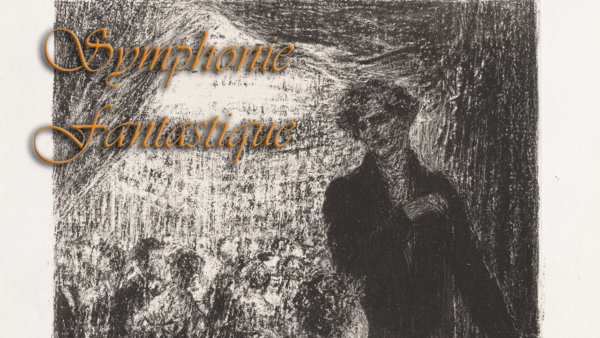
The centerpiece of the program is Hector Berlioz’s Symphonie fantastique, a work that shattered the conventions of the 19th-century symphony and helped define musical Romanticism. Written in 1830 when Berlioz was just twenty-six, the piece tells an autobiographical story of love, despair, and hallucination inspired by the composer’s infatuation with the Irish actress Harriet Smithson. Berlioz called the symphony “Episode in the Life of an Artist,” and its five movements trace the feverish fantasies of a young musician obsessed with love. From the dreamy opening Reveries and Passions, through a glittering ballroom waltz and a pastoral scene, the music grows increasingly unhinged. Under the influence of opium, the artist dreams that he has murdered his beloved, is led to the scaffold, and finally attends his own witches’ sabbath, where his once-noble love theme returns as a grotesque dance.
At the heart of the work is the idée fixe, a recurring melody representing the beloved and her hold over the artist’s imagination. This theme transforms throughout the symphony, tender in the beginning, agitated in the middle, and demonic in the end. Berlioz’s orchestration was revolutionary, expanding the expressive power of the orchestra with effects no one had dared before: four timpani for the “March to the Scaffold,” distant bells, and shrieking woodwinds that conjure visions of madness and the supernatural. Even today, Symphonie fantastique remains shocking in its emotional candor. It is music written not to please, but to confess, turning the symphony from an abstract form into a personal and psychological narrative.
On the podium for this performance is Robert Treviño, a conductor whose artistry combines passion, precision, and a deep commitment to musical storytelling. A native of Texas and of Mexican-American heritage, Treviño has quickly become one of the most sought-after conductors of his generation. He currently serves as Music Director of the Basque National Orchestra and Principal Guest Conductor of the Orchestra Sinfonica Nazionale della RAI in Italy. His career has taken him to many of the world’s leading orchestras, from the London Symphony and Leipzig Gewandhaus to The Cleveland Orchestra and The Philadelphia Orchestra. His recordings, including a complete Beethoven symphony cycle and acclaimed albums of Ravel and Rautavaara, have earned international praise for their clarity and warmth. In his hands, Symphonie fantastique becomes not only a work of Romantic excess, but one of structural brilliance and human insight.
From Ortiz’s rhythmic imagination to Ravel’s elegance and Berlioz’s fever dream, this program captures the symphony orchestra at its most vivid—a canvas for color, emotion, and reinvention. It reminds us why we listen: to experience the full range of what music can express, from the most intimate reflection to the most unrestrained outpouring of the human spirit. Join us for this thrilling episode of The Phoenix Symphony Broadcast Series, recorded live in Symphony Hall with conductor Robert Treviño, pianist Denis Kozhukhin, and The Phoenix Symphony. Learn more about upcoming broadcasts at azpbs.org/thephoenixsymphony, and share your thoughts with us on social media by tagging @PhoenixSymphony and @ClassicalArizonaPBS.
Featured in this episode:
Ortiz – Téenek
Ravel – Menuet Antique
Ravel – Piano Concerto in G – featuring Denis Kozhukhin, piano
- I. Allegramente
- II. Adagio assai
- III. Presto
Tchaikovsky – In Church, Op. 39, No. 24 – Denis Kozhukhin, piano
Berlioz – Symphonie Fantastique
- I. Rêveries – Passions
- II. Un bal
- III. Scène aux champs
- IV. Marche au supplice
- V. Songe d’une nuit du sabbat
SPOTLIGHT





STAY in touch
with azpbs.org!
Subscribe to Arizona PBS Newsletters:

Dec. 10, 2025
Handel’s Messiah – 2025
Dec. 3, 2025
Grand Canyon Suite
Nov. 26, 2025
Beethoven’s Ninth Symphony
Nov. 19, 2025
Tchaikovsky’s Piano Concerto No. 1

Nov. 12, 2025
Liszt’s Piano Concerto No. 1
Nov. 5, 2025
Symphonie Fantastique
Oct. 29, 2025
Daphnis and Chloe
Oct. 22, 2025
Brahms’ Symphony No. 1

Oct. 15, 2025
Rhapsody in Blue: A 100th Anniversary Celebration
Oct. 8, 2025
Beethoven’s “Eroica” Symphony

Oct. 1, 2025
Stravinsky’s Firebird
Sept. 22, 2025
The Planets
Dec. 5, 2024
Handel’s ‘Messiah’
Nov. 22, 2024
Mahler’s Symphony No. 2. “Resurrection”
Nov. 15, 2024
Mozart & Shostakovich: The Power of 10