Grand Canyon Suite
Dec. 3, 2025
Across the American Horizon: The Phoenix Symphony Closes Its Season with Ferde Grofé’s Grand Canyon Suite
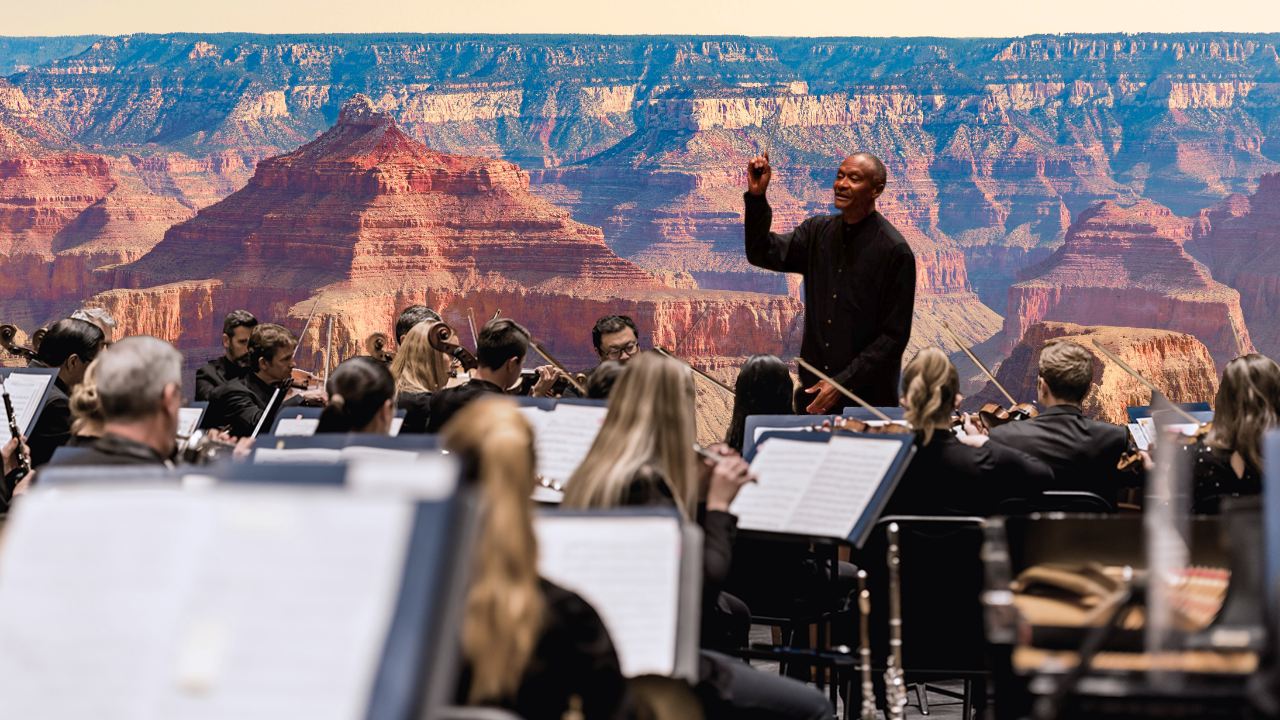
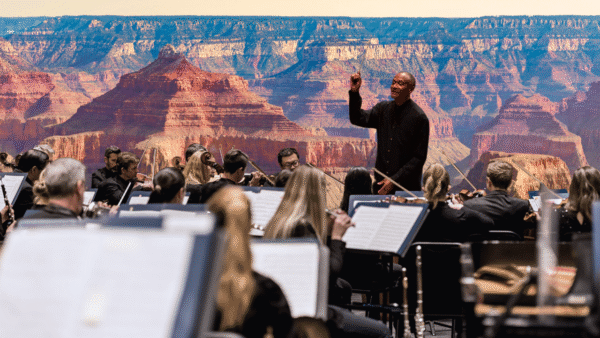
The Phoenix Symphony closed its 2024–2025 broadcast season with a program that celebrated the breadth of the Americas — from Copland’s vibrant El Salón México to the earthy rhythms of Arturo Márquez’s Fandango Violin Concerto, culminating in the vast, cinematic sweep of Ferde Grofé’s Grand Canyon Suite. Under the direction of conductor Thomas Wilkins and featuring violinist Francisco Fullana, this final concert captured the essence of musical storytelling: a journey through landscapes both physical and emotional, from the bustling dance halls of Mexico City to the boundless canyons of the American West.
The evening opened with Aaron Copland’s El Salón México, a work born of the composer’s deep affection for Mexican culture. Inspired by his 1932 visit to an actual dance hall in Mexico City, Copland translated its joyful chaos into a piece that pulses with rhythm and humanity. The music shifts from boisterous, brassy energy to moments of introspection, echoing the blend of people and sounds that filled the hall he once described as “for the peepul.” Wilkins and The Phoenix Symphony captured that sense of exuberant community perfectly — an invitation to join the dance rather than merely observe it.
Next came Márquez’s Fandango Violin Concerto, a contemporary showpiece written in 2020 for violinist Anne Akiko Meyers and premiered by Gustavo Dudamel and the Los Angeles Philharmonic. Drawing on the fandango’s Spanish origins and its transformation across Latin America, Márquez’s concerto is both virtuosic and deeply rooted in cultural memory. It reflects the composer’s own dual identity — shaped by classical training and folk traditions, by the concert hall and the fiesta.
Spanish-born soloist Francisco Fullana met the work’s challenges with grace and fire, his tone glowing with color and nuance. The three-movement concerto begins with Folia Tropical, whose rhythmic drive and melodic intensity evoke both flamenco and the Caribbean clave. The second movement, Plegaria, offers a heartfelt prayer that bridges the worlds of mariachi and classical chaconne, while the finale, Fandanguito, bursts with Huasteco dance rhythms, its demanding bowing patterns echoing the energy of traditional Mexican violinists. Fullana’s interpretation was both personal and precise — a reminder that music rooted in tradition can still speak with a modern voice.
After intermission came the concert’s surprise “mystery piece” — a tradition beloved by audiences this season. Chosen by Maestro Wilkins himself, it was revealed in performance to be Wood Notes by American composer William Grant Still. Its delicate textures and gentle optimism served as a poetic interlude, connecting the evening’s folkloric first half with the panoramic grandeur of its finale.
That finale, Grofé’s Grand Canyon Suite, remains one of the most vivid portraits of the American landscape ever written. Completed in 1931, the five-movement suite traces a day in the life of the canyon, from sunrise to sunset, with all the color, wonder, and unpredictability of nature itself. Grofé’s genius lies in his ability to merge classical orchestration with the rhythms and harmonies of American life — a skill he honed during his decade with Paul Whiteman’s groundbreaking jazz orchestra. It was Grofé, after all, who orchestrated Gershwin’s Rhapsody in Blue in 1924, giving it its iconic sound of clarinet slides and smoky brass.
But in Grand Canyon Suite, Grofé’s voice is entirely his own. “This music comes surging forth, comes singing up from our land,” he once wrote. “The sounds, the sights, the sensations revealed in my compositions are simply those which are common to all of us Americans.” That belief in shared experience animates every page of the score. The opening movement, Sunrise, unfurls in glowing layers of brass and strings, mirroring the canyon as light spills across its cliffs. The Painted Desert shimmers in suspended harmonies, a study in stillness. On the Trail, the suite’s most famous section, paints an affectionate scene of mules descending the canyon path, complete with clip-clops and braying. Sunset follows with serene grandeur, and finally, Cloudburst brings the full orchestra crashing in thunder and lightning — a reminder of nature’s awe-inspiring power.
For Wilkins, this music is more than a tone poem; it’s an expression of American character. The optimism, the spaciousness, the blend of humor and humility — it’s all there in Grofé’s sweeping orchestration. Under his baton, The Phoenix Symphony brought the canyon to life in sound, and the audience responded with the kind of enthusiasm that only a performance of this magnitude can elicit.
The concert — and the season — concluded with an extended ovation, a celebration not only of Grofé’s evocative masterpiece but also of the spirit of exploration that defines this orchestra and its music-making. Wilkins, long admired for his warmth and clarity, embodies that same spirit. As Music Director Laureate of the Omaha Symphony and Principal Conductor of the Hollywood Bowl Orchestra, he has built a career on connecting people to music that moves them. His rapport with the Phoenix audience was immediate and genuine, a reminder that great performances are as much about human connection as they are about notes and rhythm.
As the applause subsided, listeners were treated to two encore works featuring Francisco Fullana: Romanza andaluza and Zigeunerweisen by Pablo de Sarasate, performed with pianist Alba Ventura. Both selections, from Fullana’s album Spanish Light, offered a final burst of color and energy — a nod to the passion that had animated the entire evening.
It was a fitting close to an extraordinary season of broadcasts: one that celebrated heritage, imagination, and the landscapes that inspire both. From Copland’s Mexico to Grofé’s Arizona, this concert painted a musical map of the Americas — and reminded us how much beauty still waits to be discovered right here at home.
Featured in this episode:
Copland – El Salón México
Márquez – Fandango Violin Concerto – featuring Francisco Fullana, violin
- I. Folia Tropical
- II. Plegaria (Prayer) (Chaconne)
- III. Fandanguito
Fantasia on Amazing Grace – Francisco Fullana, violin
Still – Wood Notes
Grofé – Grand Canyon Suite
- I. Sunrise
- II. Painted Desert
- III. On the Trail
- IV. Sunset
- V. Cloudburst
Sarasate – Spanish Dances, Op. 22: No. 1 Romanza andaluza – Francisco Fullana, violin; Alba Ventura, piano
Sarasate – Zigeunerweisen, Op. 20 (for Violin & Piano) – Francisco Fullana, violin; Alba Ventura, piano
SPOTLIGHT



STAY in touch
with azpbs.org!
Subscribe to Arizona PBS Newsletters:
Gifts presented by Arizona PBS




Dec. 10, 2025
Handel’s Messiah – 2025
Dec. 3, 2025
Grand Canyon Suite
Nov. 26, 2025
Beethoven’s Ninth Symphony
Nov. 19, 2025
Tchaikovsky’s Piano Concerto No. 1
Nov. 12, 2025
Liszt’s Piano Concerto No. 1
Nov. 5, 2025
Symphonie Fantastique
Oct. 29, 2025
Daphnis and Chloe
Oct. 22, 2025
Brahms’ Symphony No. 1
Oct. 15, 2025
Rhapsody in Blue: A 100th Anniversary Celebration
Oct. 8, 2025
Beethoven’s “Eroica” Symphony
Oct. 1, 2025
Stravinsky’s Firebird
Sept. 22, 2025
The Planets
Dec. 5, 2024
Handel’s ‘Messiah’
Nov. 22, 2024
Mahler’s Symphony No. 2. “Resurrection”
Nov. 15, 2024
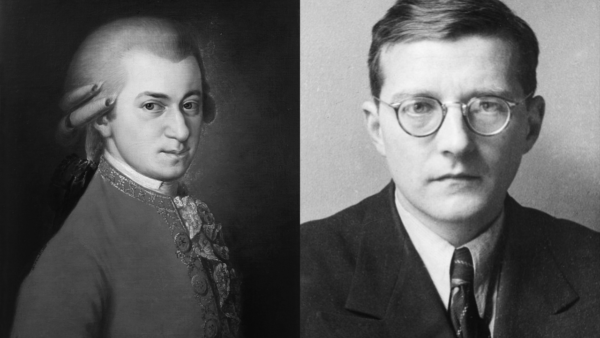
Mozart & Shostakovich: The Power of 10