The Arizona State University (ASU) John Shufeldt School of Medicine recently began its first classes and welcomed its first cohort during a white coat ceremony.
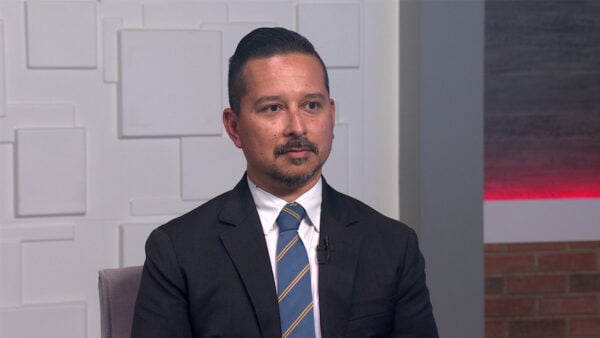
Holly Lisanby, founding Dean of the ASU John Shufeldt School of Medicine, joined “Arizona Horizon” to discuss the new medical school.
ASU’s medical school teaches based on a comprehensive approach to health. Their focus is on putting the humanities, engineering, biological sciences, AI, community care, health systems and research together to provide a path forward for their “physician-engineers.”
The medical school’s unique approach to health care education was developed to make care more effective and responsive while better connecting health care providers with their patients.
The school combines traditional medical education with engineering, allowing students to earn both an M.D. and a master’s degree in medical engineering over four years. Lisanby said the program is designed to prepare students to approach health care challenges differently.
“We are reimagining medical education for the future, acknowledging that new developments in technology can transform what’s possible,” Lisanby said. “We have fully integrated next-generation technologies, artificial intelligence and so on into not only what we teach but how we teach it.”
The class consists of 36 students from 11 states. Lisanby said the school looks for students who are interested in combining medicine and engineering to improve health outcomes.
“A problem solver. Someone who looks at some of the problems that exist in health care today and doesn’t say, ‘Well, that’s just the way we’ve always done it,’ but rather says, ‘Let’s work on a solution to the problem,’” Lisanby said.
Students will receive clinical training through partnerships with HonorHealth, the Phoenix VA and Phoenix Children’s Hospital.
The program began classes in downtown Phoenix at the Mercado, with orientation starting July 27 and formal classes beginning Aug. 3. Lisanby said the school plans to grow as it develops.
“After that, prepared to do residencies in order to practice medicine,” Lisanby said, explaining that graduates will leave with the training needed to become practicing physicians while also using their engineering backgrounds to develop new solutions.