President Donald Trump said the U.S. will reduce military drills with South Korea after they declined to join the U.S. in the “denuclearization” of Iran. President Trump also said his strong relationship with North Korea’s Kim Jong Un makes the military drills with South Korea “hostile” towards North Korea.
Experts said these joint drills are necessary to help ensure our military is prepared for threats.
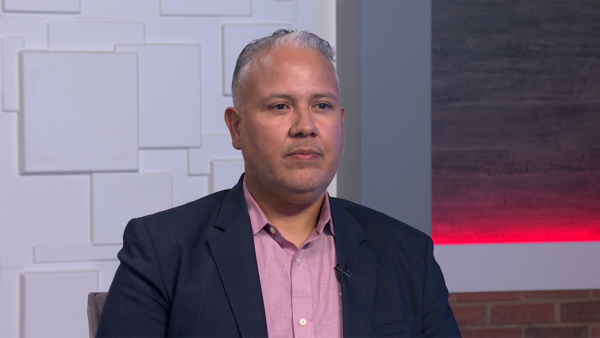
Daniel Rothenberg, co-director at Future Security Initiative at ASU, joined “Arizona Horizon” to discuss the concerns about military readiness.
Rothenberg noted that it is a “reasonable” question to ask of the amount of support that the U.S. provides to its allies. When it comes to the U.S.’s relationship with South Korea, he broke down the different perspectives of the matter.
“You can view it as an investment in both regional security and our own national security, in global security. Or you could view it as some kind of a bad deal. We could put this in the context of something like $5 billion a year, when you count, that’s the U.S. support for this military presence. You know, that’s maybe three to four days of the current Iran war in cost,” Rothenberg said.
In taking these actions and sharing these words, Rothenberg acknowledges that this sends a “confusing message” to the rest of the world, including to the allies of the U.S..
“It’s not clear exactly what he substance of this is in the long term. It’s not clear if it’s a passing phase,” Rothenberg said.
Looking to the future of the relationship between U.S. and South Korea, Rothenberg shared what he believes to be the best course of action.
“The best way forward would be sort of what the South Koreans are suggesting, which is some graduated process whereby they come to an agreement. You know, you stop the increase in nuclear research and advancements, and then you try to whittle away at the stockpile and maybe eventually in the future, there is some sort of nonproliferation,” Rothenberg said.