A new image of the galaxy cluster known as “El Gordo” (The Big One) is revealing distant and dusty objects never seen before.
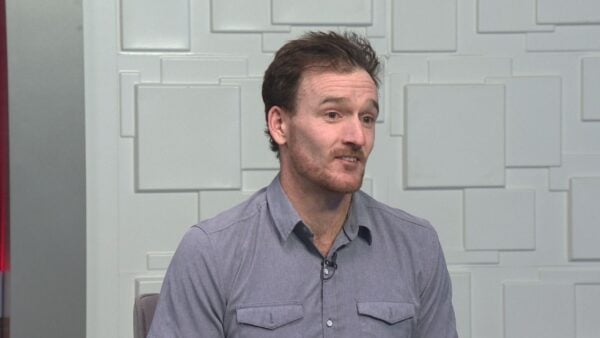
Dr. Patrick Kamieneski, an astrophysicist at Arizona State University joins us to talk more about “El Gordo”.
El Gordo is a cluster of hundreds of galaxies that existed when the universe was 6.2 billion years old, making it a “cosmic teenager.” It was the most massive cluster known to exist at that time.
NASA’s James Webb Space Telescope captured the image. It displays a variety of unusual, distorted background galaxies that were only hinted at in previous Hubble Space Telescope images.
“This is a galaxy that is very actively forming stars, our Milky Way galaxy forms about one new star a year, these galaxies are forming about hundreds sometimes even thousands a year. So, they’re so much more active than our Milky Way galaxy and that’s partly because we’re seeing them at a time when our galaxies in the universe were more active,” Kamieneski said.
El Gordo was targeted because it acts as a natural, cosmic magnifying glass through a phenomenon known as gravitational lensing. Its powerful gravity bends and distorts the light of objects lying behind it, much like an eyeglass lens. One of the most striking features in the image is a bright arc represented in red at the upper right.
Nicknamed “El Anzuelo” (The Fishhook), the light from this galaxy took 10.6 billion years to reach Earth. Its distinctive red color is due to a combination of reddening from dust within the galaxy itself and cosmological redshift due to its extreme distance.
“We’re really looking into only a few billion years after the big bang is early in the universe and so we’re seeing objects that are very very early, some of the first galaxies that were formed in the universe,” Kamieneski said.