On Thursday, Jan. 29, 2026, Arizona Senate Republicans passed a resolution formally calling for Arizona Attorney General Kris Mayes (D) to resign after her controversial comments about ICE and the “Stand Your Ground” laws.
Arizona State Senate Majority Leader John Kavanagh (R), who sponsored SR 1036, stated, “The Attorney General publicly suggested Arizonans could invoke self-defense laws against law enforcement officers.”
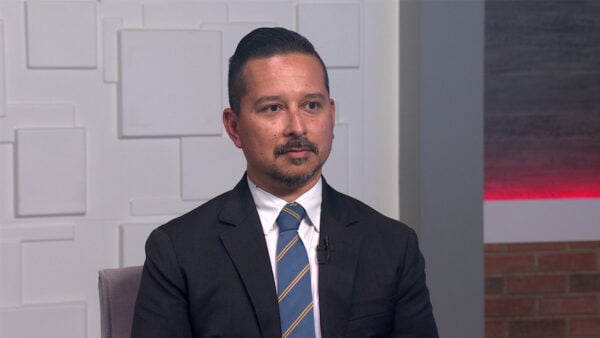
Senator Kavanagh joined “Arizona Horizon” to discuss topics such as ICE issues, Attorney General Mayes’ comments, Governor Katie Hobbs’ response, and tax season.
“First, she retracts the dangerous, misleading information that she stated concerning when people can use…deadly force, shoot police officers,” Kavanagh said.
Kavanagh explained how the issue began with the argument of when people use deadly force against cops in I.C.E. situations. According to Kavanagh, Mayes stated that it applies if the officers are only partially or not easily identifiable.
“Which just isn’t true,” Kavanagh explained, “…she took the use of force law, which is complicated, lengthy, very nuanced, and she distilled it into a sound bite, as part of a political anti-ICE statement.”
Kavanagh emphasized that he and his colleagues never thought Mayes wanted to endanger cops, but had a problem with her misstating the law.
“I was a detective sergeant before I retired,” Kavanagh said, “…we simply had our badge out. Under the Mayes’ interpretation, because we are not clearly identified, people can shoot us…that’s not true.”
According to Kavanagh, many police groups and sheriff associations agreed that Mayes had misstated the law and misled people with her remarks.
“The term ignorance of a law is no excuse applies when you have been getting bad information from a public official in charge of interpreting the law,” Kavanagh explained, “…that’s what she did.”
Kavanagh discussed that he believed Mayes confused the law of justification, which is one section of the law, with the castle doctrine. The doctrine states that if you’re in your home and the other section already justifies you, you don’t have to retreat. The “stand your ground” law says if the other section of law says you can use deadly force, then outside your home, you also don’t have to retreat.
“She even confused the section of law,” Kavanagh said, “…and she is the head attorney for the state.”