A new exhibit at the ASU Art Museum called “Picturing the Familiar” features the work of Mexican American artist Carmen Lomas Garza. The various artwork depicts the everyday lives of Mexican Americans across many generations.
Garza’s work has shaped how many people see the history, traditions and values of Mexican Americans. Her goal is to impact how these stories are passed down to multiple generations.
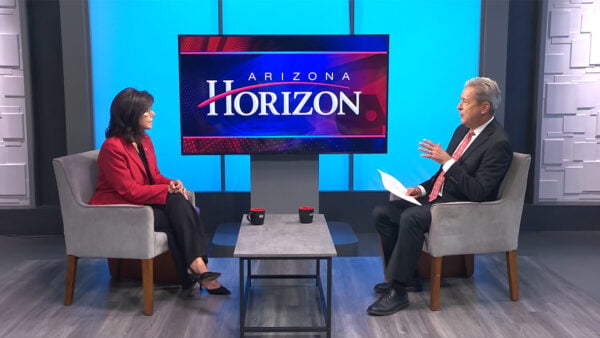
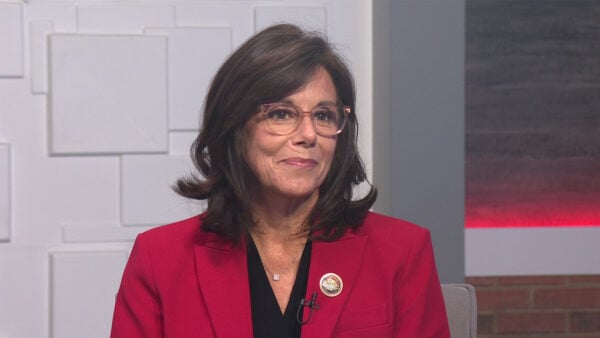
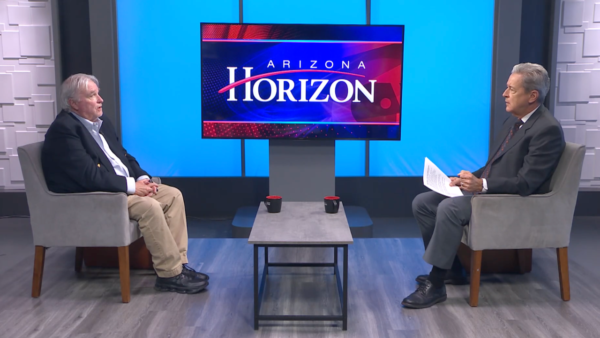
Alana Hernandez, Senior Curator at the ASU Art Museum, joined “Arizona Horizon” to discuss Garza’s vision and the future of the exhibition.
Hernandez explained Garza was an educator and activist who grew up during the Chicano movement. In trying to find her place within it, Garza decided to take on art as a vehicle for messages through a children- and family-centric lens that is based on her background as an educator.
Garza’s art that’s on display “monumentalizes everyday moments,” according to Hernandez. Hernandez also described how Garza personally conveyed this in her art.
“She does this with a really intentionally flat perspective. So that when viewers of any age, specifically children, when they come to see the exhibition or see her work, you’re seeing a flattened version of every detail of tables, the detail of bedrooms, things like that. It’s very special,” Hernandez said.
Garza’s hope through her work was to create her own voice and to “bolster Mexican communities,” Hernandez said. But on the flip side of that is what Garza helped to inspire and motivate in others.
“By extension, so many of her peers learned from her to understand that when they are trying to create a Chicano vernacular, what does that look like? And so they understood the radicality of picturing the every day was very important,” Hernandez said.
The exhibition is organized chronologically and thematically and all together is a “contextual retrospective.”
“We are not only just seeing Carmen’s work, but we’re seeing her work alongside her peers and those that either influenced her or she influenced as well. We’re not seeing artists working in a silo, but we see, importantly, artists working in community. And specifically from Mexican American communities, how important that is,” Hernandez said.